Bienvenue sur le site de Patrice Aguilar


Le guide ultime pour photographier les chevaux blancs de Camargue
qui vous garantit la réussite de superbes photos de chevaux de Camargue
Tout ce qu'il faut savoir pour photographier l'une des races de chevaux les plus emblématiques au monde dans le sud de la France
Meilleurs sites, réglages de l'appareil, lumière, comportement, éthique et expérience exclusive sur le terrain.
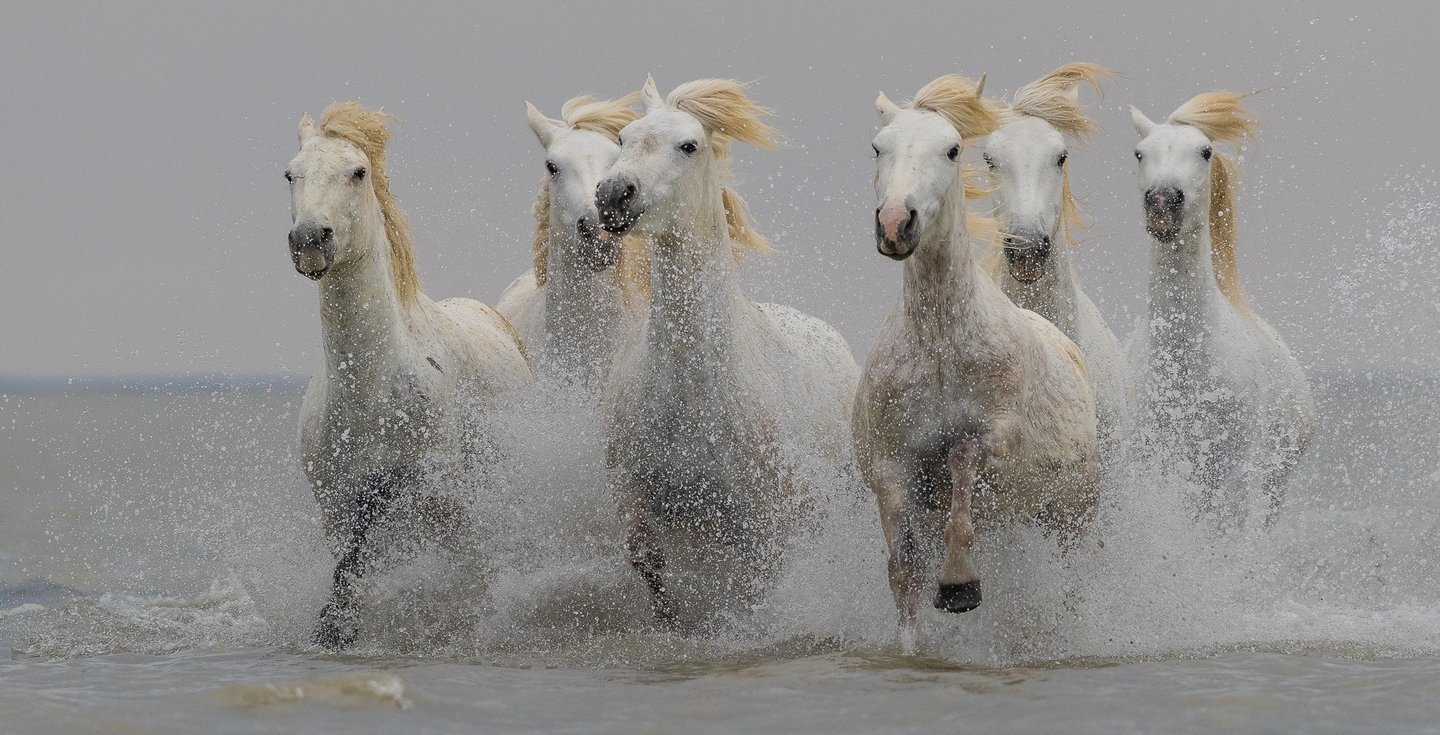
Avant l'aube, la nature s'éveille. Seuls les chants des oiseaux résonnent sur l'étang.
Une brume légère flotte sur l'eau tandis que nous attendons en silence un spectacle inoubliable.
Soudain, au loin, nous l'entendons.
Le bruit des sabots.
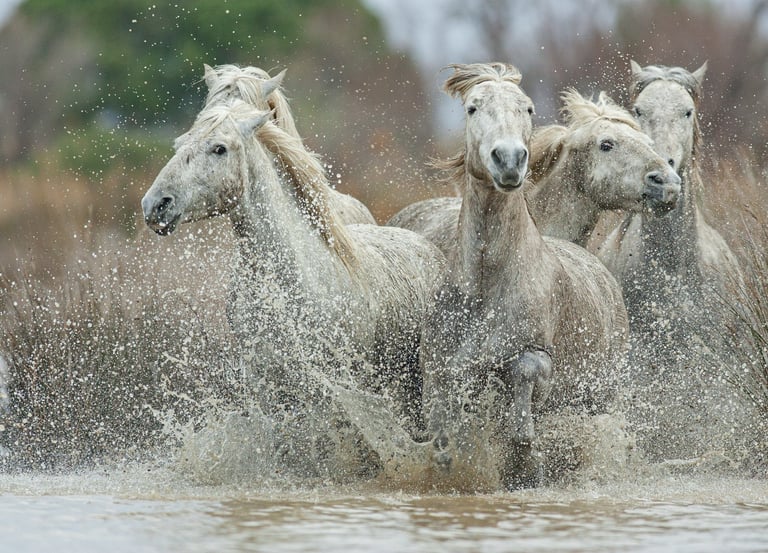
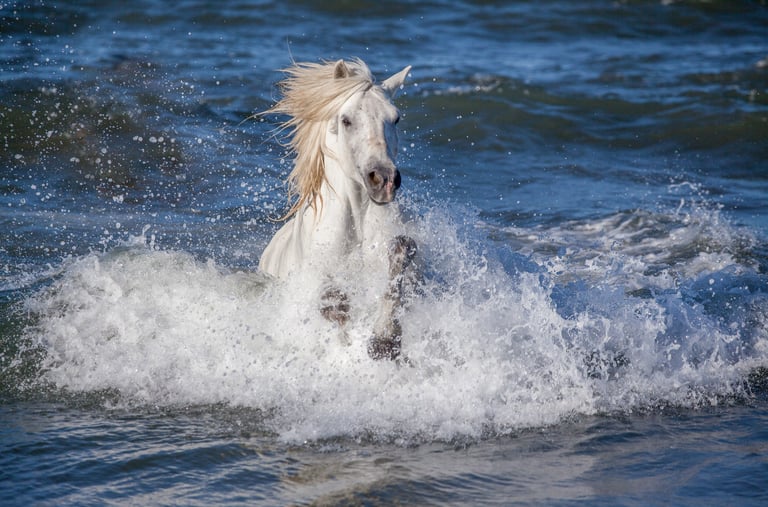
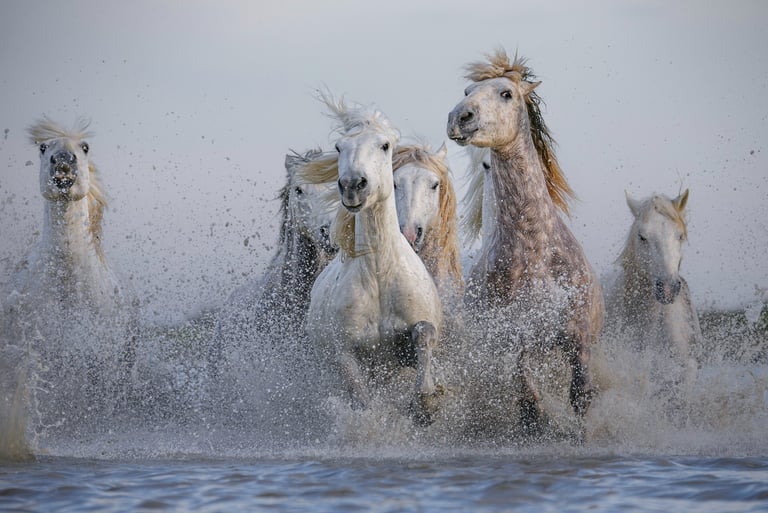
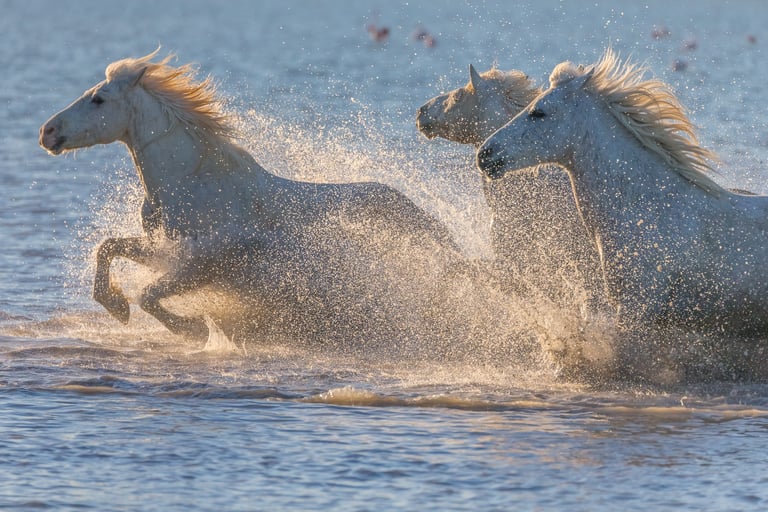
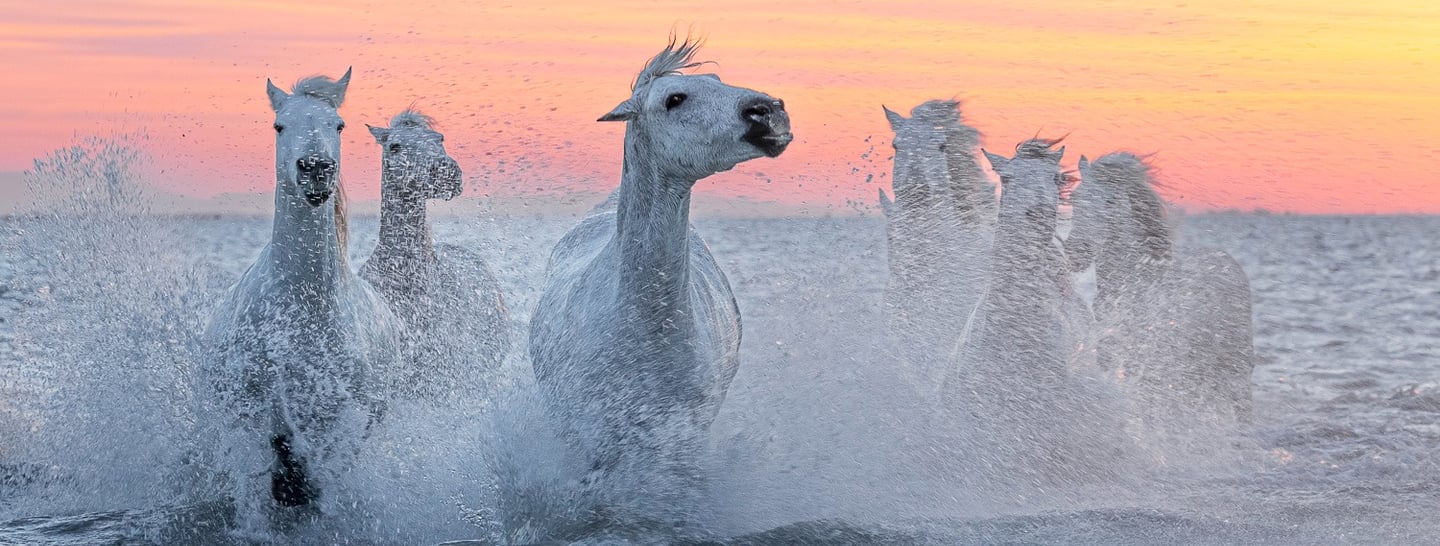
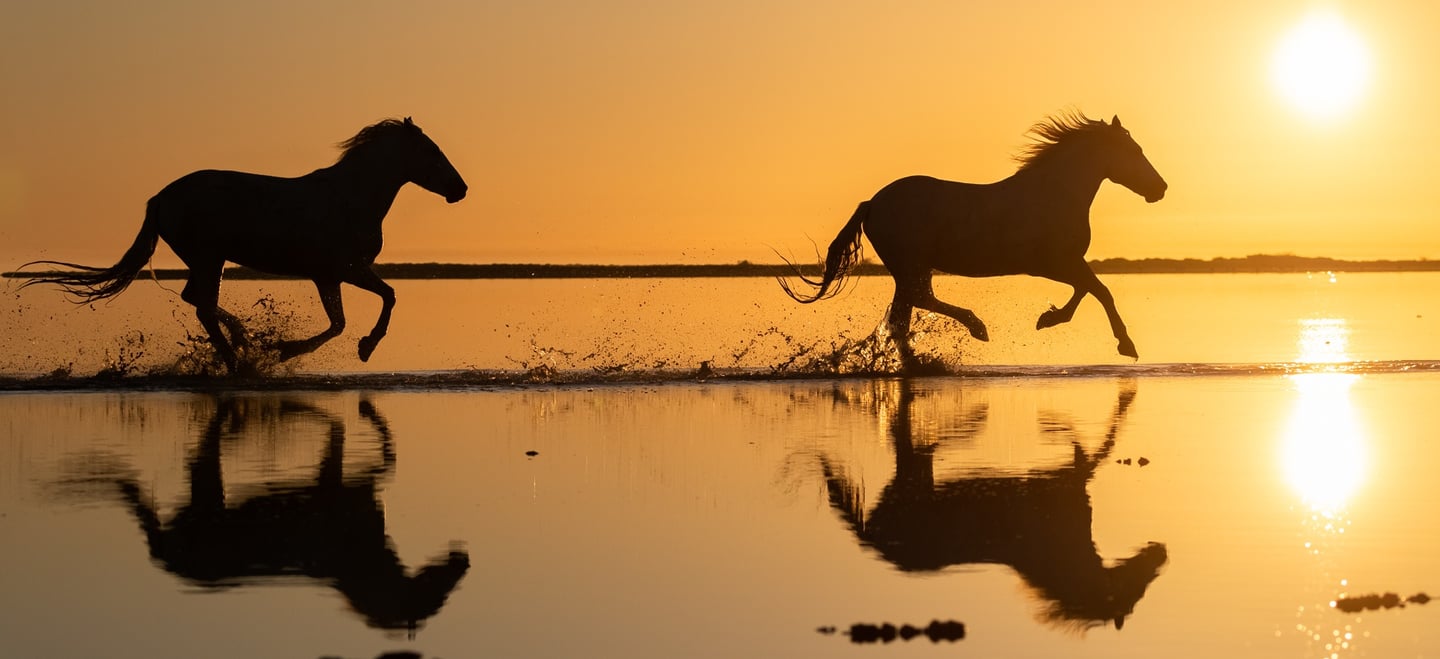
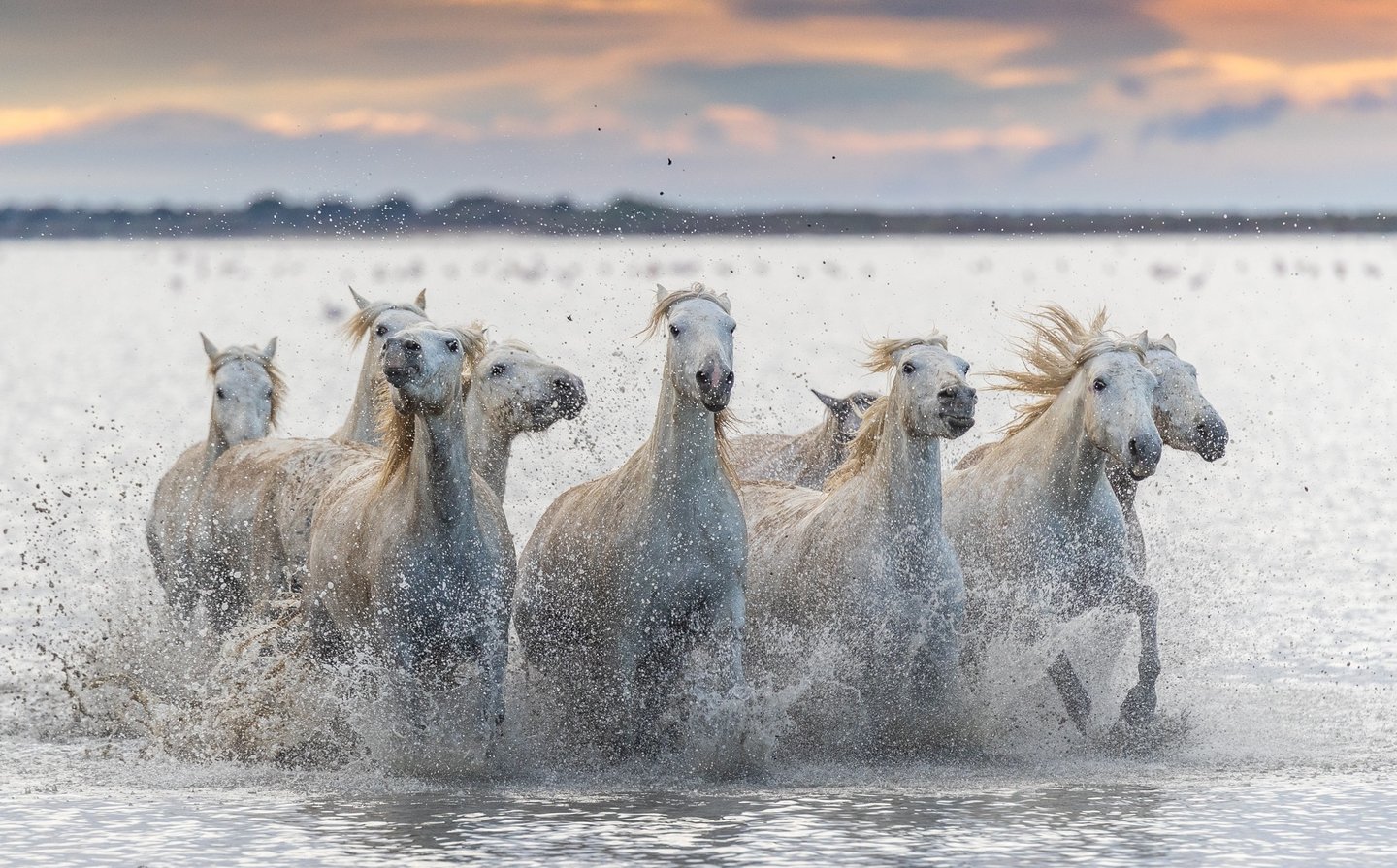
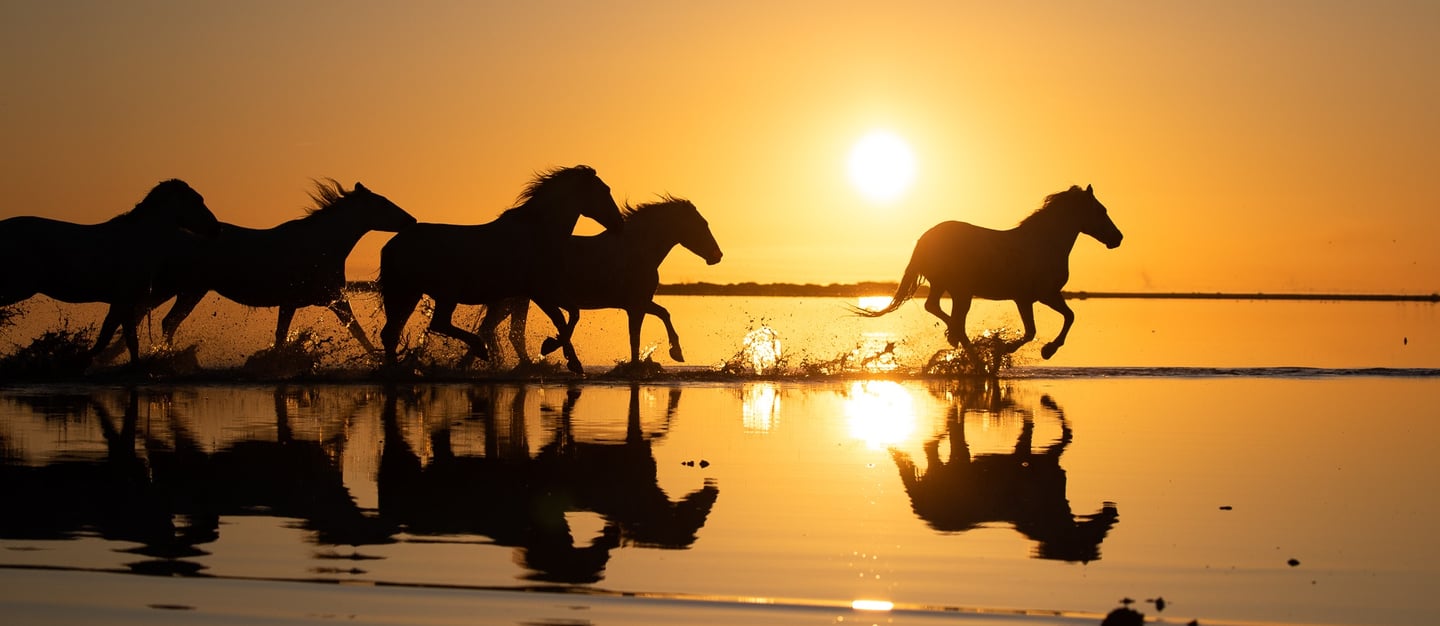
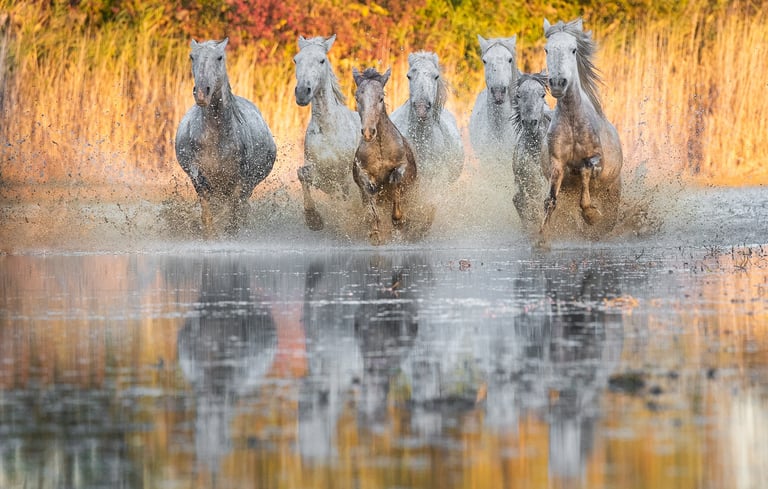
Quelques instants plus tard, un troupeau de magnifiques chevaux blancs surgit de l'eau, illuminé par les premiers rayons dorés de l'aube. L'eau jaillit sous leurs foulées puissantes tandis que le soleil levant baigne le paysage d'une lumière chaude et dorée.
Bien plus qu'une simple séance photo de chevaux, bien plus qu'un workshop photo en Camargue.
C'est l'une des expériences photographiques animalières les plus époustouflantes d'Europe, une rencontre avec l'esprit sauvage de la Camargue que tous les photographes ne peuvent oublier.
Découvrez les chevaux blancs sauvages de Camargue, dans le sud de la France.
Majestueux, libres et baignés par la lumière dorée des marais, les chevaux blancs de Camargue comptent parmi les animaux les plus emblématiques d'Europe.
L'histoire du cheval de Camargue est fascinante. Depuis des siècles, ils parcourent les vastes étendues sauvages du delta du Rhône, évoluant entre lagunes, marais salants, roselières et plages de sable fin. Ils se sont ainsi remarquablement adaptés à l'environnement unique, et parfois très rude, de la Camargue : vents violents, chaleur estivale, moustiques et zones marécageuses.
Considéré comme l'une des plus anciennes races équines d'Europe, le cheval de Camargue est parfaitement adapté à son milieu. Rustique, agile et doté d'une endurance remarquable, il vit à l'état semi-sauvage tout au long de l'année au sein de troupeaux appelés « manades », élevés selon des traditions ancestrales par les gardians, les célèbres cavaliers de Camargue.
Pourtant, ce qui fascine peut-être le plus, c'est leur robe immaculée. Fait intéressant, ces chevaux naissent avec une robe sombre, allant du gris foncé au noir, avant de blanchir progressivement au fil des années. Cette transformation renforce leur aura presque mythique et explique pourquoi ils sont aujourd'hui l'un des symboles les plus reconnaissables de la Camargue.
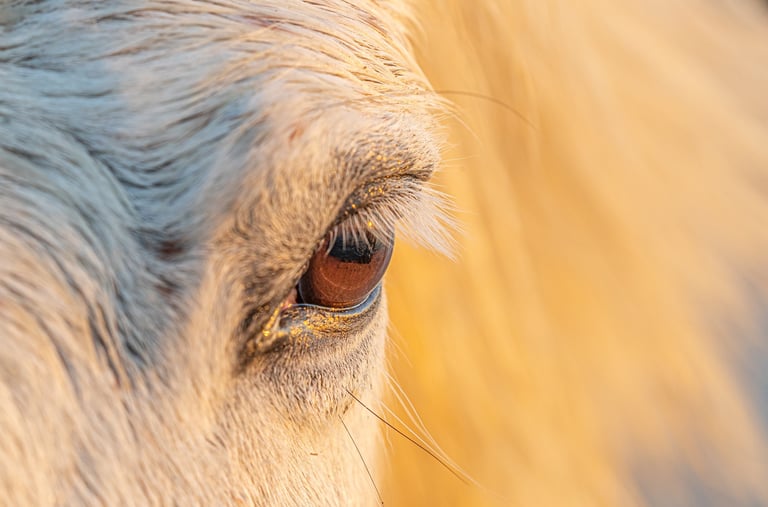
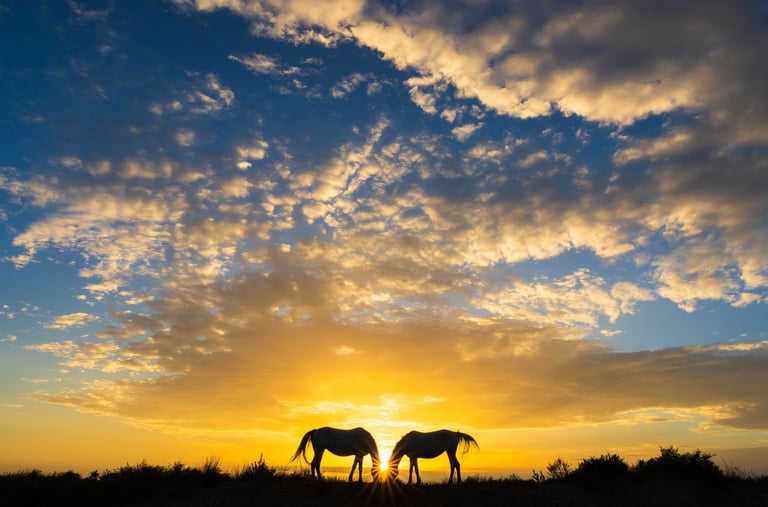
Bien plus qu'une simple race équine, le cheval de Camargue incarne un véritable patrimoine vivant. Il est intimement lié à l'identité culturelle du sud de la France, accompagnant depuis des générations les gardians dans la conduite des taureaux. Leurs silhouettes élégantes, qu'ils traversent les marais ou galopent dans l'écume, sont devenues des images emblématiques qui attirent chaque année des milliers d'amoureux de la nature, de la photographie et du voyage.
Pour les photographes se rendant en Camargue avec de grandes ambitions en matière de photographie équine, les chevaux blancs de la région constituent un sujet exceptionnel. Leur puissance, leur élégance et leur liberté, alliées à la lumière spectaculaire des levers et couchers de soleil, créent des scènes d'une rare intensité.
Voir un troupeau émerger de l'eau au milieu d'un nuage d'embruns est une expérience inoubliable, qui marque durablement tout passionné de photographie animalière. Aujourd'hui, les chevaux de Camargue sont bien plus qu'un emblème régional : ils incarnent l'esprit sauvage et authentique de la Provence et figurent parmi les sujets les plus prisés des photographes du monde entier.
Une génétique unique : pourquoi les chevaux de Camargue sont blancs
Les chevaux de Camargue sont réputés pour leur magnifique robe blanche, qui contraste avec les paysages sauvages des marais du sud de la France. Toutefois, cette couleur immaculée n'est pas présente à la naissance.
En réalité, les poulains camarguais naissent avec une robe sombre, généralement noire, baie ou brun foncé, et subissent un processus de dépigmentation progressive au fil des années. Ce phénomène fascinant s'explique par un mécanisme génétique spécifique lié au « gène gris ».
La couleur blanche des chevaux de Camargue adultes ne provient pas d'un gène de robe blanche, mais plutôt de l'action d'un gène de grisonnement. Ce gène, scientifiquement identifié sous le nom de STX17 (Syntaxine-17) et situé sur le chromosome 25, agit comme un gène modificateur sur la couleur de base de la robe du cheval.
Le mécanisme cellulaire du grisonnement
Le processus de grisonnement est lié au comportement des mélanocytes, les cellules responsables de la production de mélanine (le pigment qui colore la peau et les poils).
La mutation du gène STX17 provoque une hyperstimulation des mélanocytes durant les premières années du poulain. Cette hyperactivité explique pourquoi les poulains destinés à devenir gris naissent souvent avec une robe plus foncée et plus saturée que les poulains non gris.
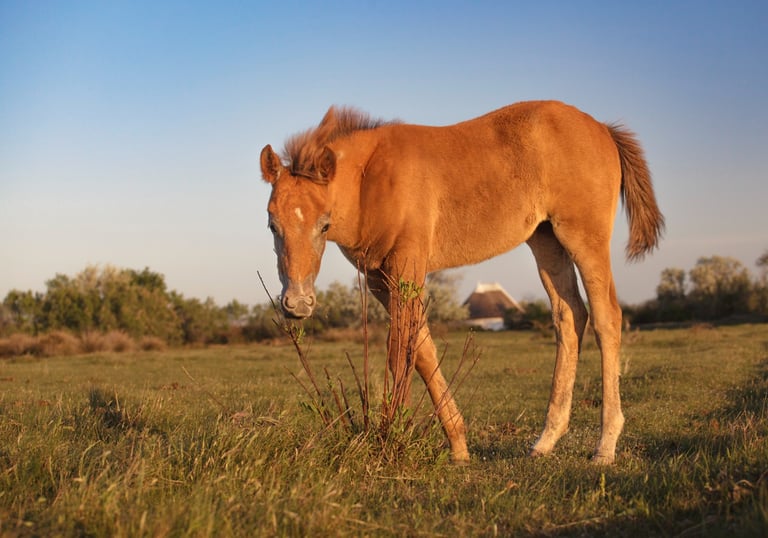
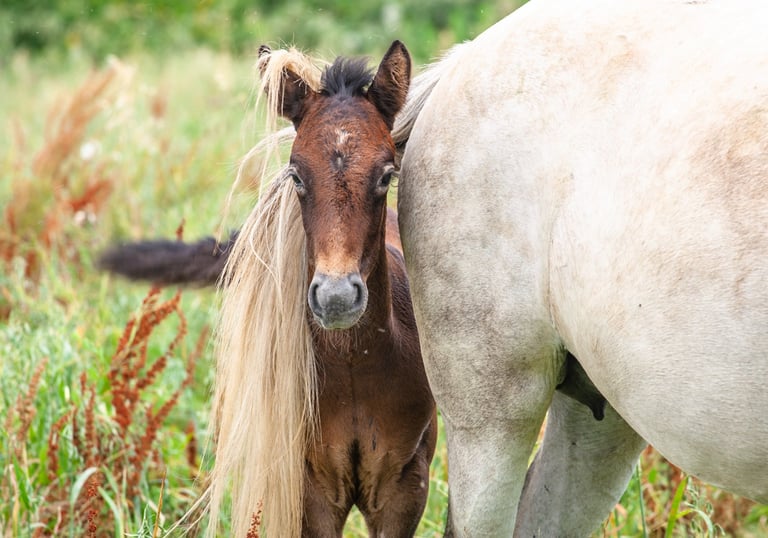
Toutefois, cette prolifération excessive a un prix : elle épuise prématurément le réservoir de cellules souches mélanocytaires situé à la base des follicules pileux. Lors de la mue et du renouvellement du pelage, les nouveaux poils poussent sans pigment, car les mélanocytes ne sont plus en mesure de produire de la mélanine. Par conséquent, le poil devient blanc.
Un trait génétique aux conséquences importantes
Si ce processus confère aux chevaux de Camargue leur apparence emblématique, il est également associé à une prédisposition médicale. L'hyperprolifération des mélanocytes induite par le gène STX17 augmente considérablement le risque de développer des mélanomes (tumeurs cutanées).
Des études montrent qu'environ 70 à 80 % des chevaux gris âgés de plus de 15 ans développent des mélanomes ; ceux-ci sont généralement bénins, mais peuvent parfois devenir malins.
Conclusion
Le blanchiment progressif des chevaux de Camargue constitue un magnifique exemple de génétique évolutive. Il ne s'agit pas d'un changement de robe magique lié à l'environnement salin de la Camargue, mais plutôt de l'expression d'une mutation génétique ancienne (le gène STX17). Cette mutation entraîne l'épuisement précoce des cellules pigmentaires, transformant un poulain noir comme la nuit en un cheval blanc comme l'écume.
Chevaux de Camargue : maîtres de l'adaptation dans un écosystème unique
Le cheval de Camargue est réputé pour sa capacité à prospérer dans les conditions rudes et uniques de son habitat naturel : les marais salants du delta du Rhône. Au fil des siècles, une sélection naturelle rigoureuse a façonné ces chevaux, les dotant d'adaptations morphologiques, physiologiques et comportementales remarquables qui leur permettent de survivre et de s'épanouir dans cet écosystème exigeant.
Adaptations morphologiques et physiques
La morphologie du cheval de Camargue est parfaitement adaptée à son environnement humide et parfois inhospitalier :
Sabots larges et résistants : L'une des adaptations les plus caractéristiques réside dans la taille et la robustesse de leurs sabots. Larges et évasés, ils offrent une meilleure portance et une excellente adhérence sur les sols meubles, boueux et gorgés d'eau des marais, empêchant ainsi le cheval de s'enfoncer. Cette particularité est si marquée qu'ils ne nécessitent généralement pas de ferrure.
Corps compact et robuste : Le Camargue est un cheval de taille moyenne (environ 1,35 à 1,45 m au garrot) doté d'un corps compact, de membres courts et solides, ainsi que d'une musculature puissante. Cette morphologie leur confère une grande agilité et une endurance exceptionnelle, des qualités essentielles pour évoluer sur des terrains variés et parfois difficiles. Leurs épaules basses et leurs membres robustes les rendent très agiles, capables d'effectuer des virages serrés, même au galop.
Robe dense et résistante à l'eau : Si leur robe grise (qui blanchit avec l'âge, comme vous le savez désormais) est leur caractéristique la plus connue, leur pelage est également dense et résistant à l'eau. Cette fourrure épaisse les protège efficacement contre le froid, l'humidité et les vents violents qui peuvent balayer la Camargue, même en hiver.
Résistance aux insectes : La texture de leur peau ainsi que la densité de leurs crins et de leur queue contribuent à les protéger des piqûres d'insectes, ces derniers étant particulièrement abondants dans ces zones humides.
Adaptations physiologiques et comportementales
Au-delà de leurs caractéristiques physiques, les chevaux de Camargue ont développé des traits physiologiques et comportementaux qui optimisent leur survie :
Une alimentation frugale et variée : Les chevaux de Camargue sont réputés pour leur rusticité et leur capacité à prospérer avec peu de ressources. Ils peuvent se nourrir de végétaux que d'autres équidés délaissent, tels que les roseaux, les herbes des marais et les halophytes (plantes tolérantes au sel). Cette aptitude à valoriser une végétation de faible qualité est cruciale dans un environnement où les pâturages luxuriants sont rares.
Thermorégulation : Ils s'adaptent parfaitement aux extrêmes climatiques méditerranéens, supportant aussi bien la chaleur intense de l'été que le froid mordant et l'humidité de l'hiver. Leur capacité à vivre en plein air toute l'année, souvent les sabots dans l'eau, témoigne de leur excellente thermorégulation.
Rusticité et résilience : Élevés à l'état semi-sauvage au sein de manades (troupeaux), les chevaux de Camargue développent une grande autonomie, de l'intelligence et un tempérament indépendant. Ils apprennent à chercher leur nourriture, à s'abriter des intempéries et à interagir au sein de leur groupe ; autant d'atouts qui renforcent leur résilience face aux défis de leur environnement.
Un tempérament calme et loyal : Malgré leur indépendance, ils sont connus pour leur nature calme et leur loyauté une fois apprivoisés. Ces qualités en font des partenaires indispensables pour les gardians, qui comptent sur eux pour gérer le bétail dans les marais.
Le cheval de Camargue est un exemple frappant d'adaptation réussie à un environnement spécifique. Chaque aspect de l'animal, de ses sabots robustes et son pelage protecteur jusqu'à son alimentation et son comportement social, est le fruit d'une longue co-évolution avec les marais de Camargue. Cette résilience fait de ce cheval non seulement un symbole culturel fort de la région, mais aussi un acteur écologique clé dans la préservation de la biodiversité des zones humides.
Symbolique du cheval de Camargue : liberté, tradition et inspiration artistique
Le cheval de Camargue, avec sa robe blanche emblématique et son allure sauvage, est bien plus qu'une simple race équine; c'est une véritable icône culturelle, profondément ancrée dans l'identité de la Provence et de la Camargue. Symbole de liberté, de force et de résilience, il incarne l'esprit indompté de sa terre natale et inspire depuis longtemps artistes et écrivains.
Liberté et force : l'esprit sauvage des marais
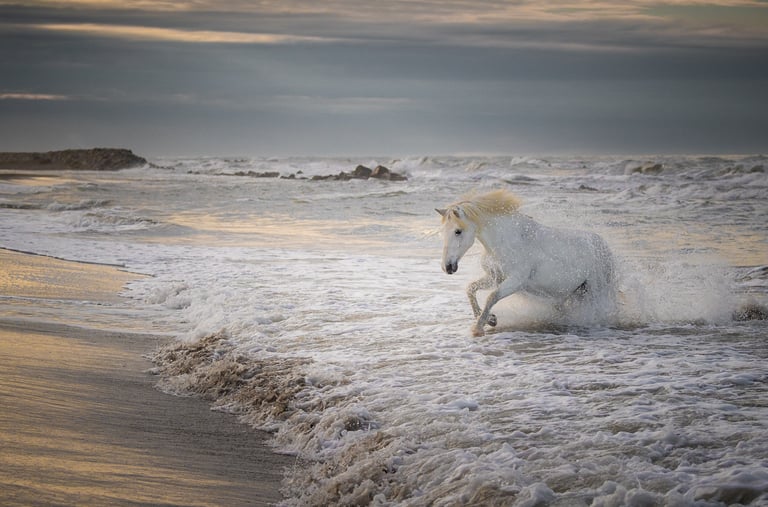
Le cheval de Camargue est, avant tout, un symbole de liberté. Élevé en semi-liberté au cœur des vastes étendues de marais et de zones salines, il galope, crinière au vent, le long des plages et à travers les roselières, offrant une image puissante d'une nature sauvage et préservée. Cette vie en plein air, façonnée par les éléments, confère à l'animal une force et une endurance exceptionnelles, lui permettant de s'adapter aux conditions rigoureuses de son environnement.
On lui prête souvent un « esprit indomptable » et une « nature indépendante », des traits qui reflètent ses origines sauvages et sa capacité à survivre sans intervention humaine constante. Cette autonomie et cette robustesse sont des qualités admirées et célébrées par les habitants de la région.
Les traditions camarguaises et le rôle des gardians
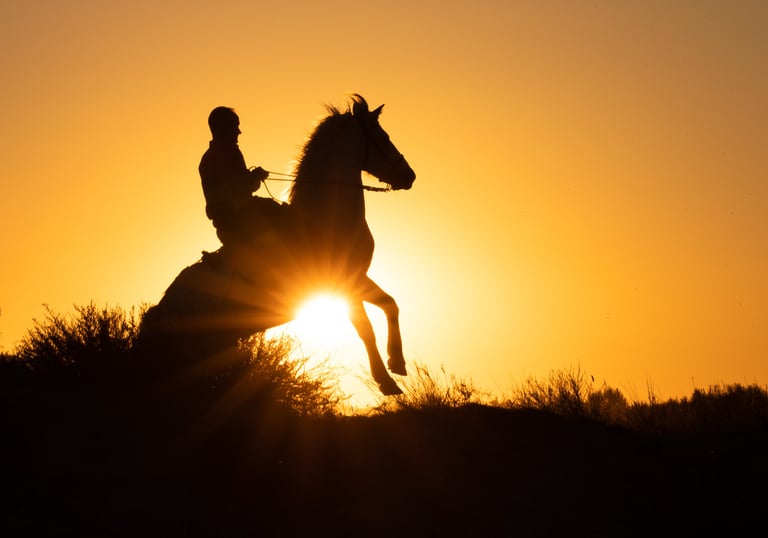
Le cheval camarguais est indissociable des traditions camarguaises et figure emblématique du gardian. Ces cavaliers, véritables « chevaliers du delta », veillent sur les troupeaux de taureaux semi-sauvages, comptant sur le cheval à la fois comme outil de travail indispensable et comme fidèle compagnon.
Le lien entre le gardien et son cheval est profond, ancré dans la confiance et la compréhension mutuelle. Un dicton local dit que ces chevaux « n'obéissent pas ; ils comprennent ». Ensemble, ils participent aux ferrades (marquage des poulains au fer chaud), aux abrivados et bandidos (conduites des taureaux dans les rues du village) et autres fêtes populaires qui rythment la vie camarguaise. Ces événements sont l'expression vivante d'une culture transmise de génération en génération, avec le cheval au cœur de l'action et de l'identité locale.
Culture provençale : un patrimoine vivant
Le cheval de Camargue est un pilier de la culture provençale, incarnant un héritage qui traverse les millénaires. Sa présence dans la région remonte à l'époque romaine, et il est considéré comme l'une des plus anciennes races équines au monde. Il symbolise la fierté d'un peuple profondément attaché à ses racines et à son mode de vie traditionnel. La reconnaissance officielle de la race en 1978 a contribué à préserver sa pureté ainsi que son rôle au sein du paysage culturel et écologique de la Camargue.
Il est souvent associé à d'autres emblèmes de la Camargue, tels que le taureau et le flamant rose, formant une triade iconique qui représente l'âme de cette terre sauvage et authentique.
Inspiration artistique : du film « Crin-Blanc » à l'art moderne
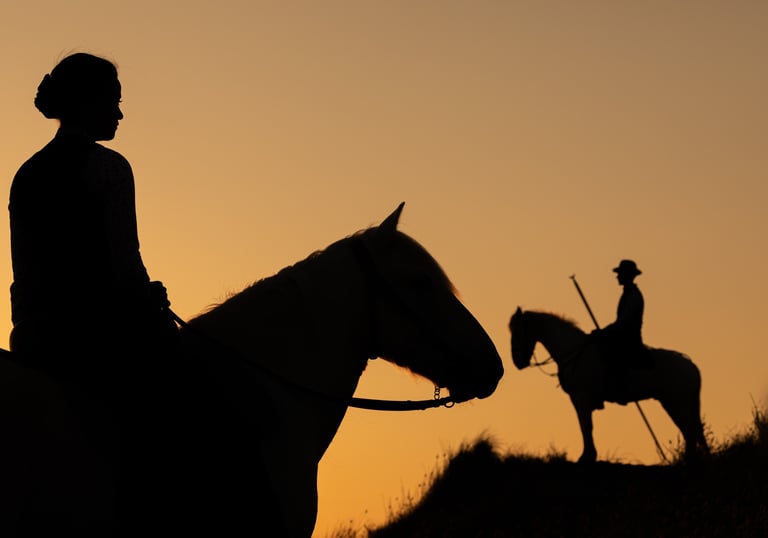
La beauté et l'esprit du cheval de Camargue constituent depuis longtemps une source majeure d'inspiration artistique. Sa robe blanche, contrastant avec les eaux sombres des marais et l'azur du ciel, en fait un sujet de prédilection pour les photographes, les peintres et les cinéastes.
L'œuvre la plus célèbre inspirée par le cheval de Camargue est sans conteste Crin-Blanc, le film et le livre d'Albert Lamorisse datant de 1953. Ce récit poétique dépeint l'amitié indéfectible entre un jeune pêcheur, Folco, et un étalon sauvage, Crin-Blanc, trop fier pour se laisser dompter par l'homme. Le film a immortalisé l'image du cheval de Camargue comme symbole d'une liberté indomptable et de pureté, contribuant ainsi à sa renommée mondiale.
Au-delà de Crin-Blanc, le cheval de Camargue continue d'inspirer de nombreux artistes, écrivains et poètes, qui voient en lui l'incarnation d'une beauté sauvage, de la résilience et de l'harmonie entre l'homme et la nature. Célébré dans la littérature, la peinture, la sculpture et la photographie, il témoigne de l'empreinte durable qu'il laisse dans l'imaginaire collectif.
Camargue : une destination premium en France pour la photographie animalière et équestre
La Camargue, vaste étendue sauvage située dans le delta du Rhône, jouit d'une renommée mondiale en tant que cadre exceptionnel pour la photographie équestre. Ce statut privilégié découle d'une alliance unique entre paysages spectaculaires, lumière incomparable, faune emblématique et traditions humaines profondément ancrées.
La lumière incomparable du sud de la France
La lumière de Camargue constitue l'un de ses atouts majeurs. Le ciel vaste et souvent limpide, conjugué à l'omniprésence de l'eau, crée des conditions d'éclairage exceptionnelles. Les photographes sont particulièrement séduits par :
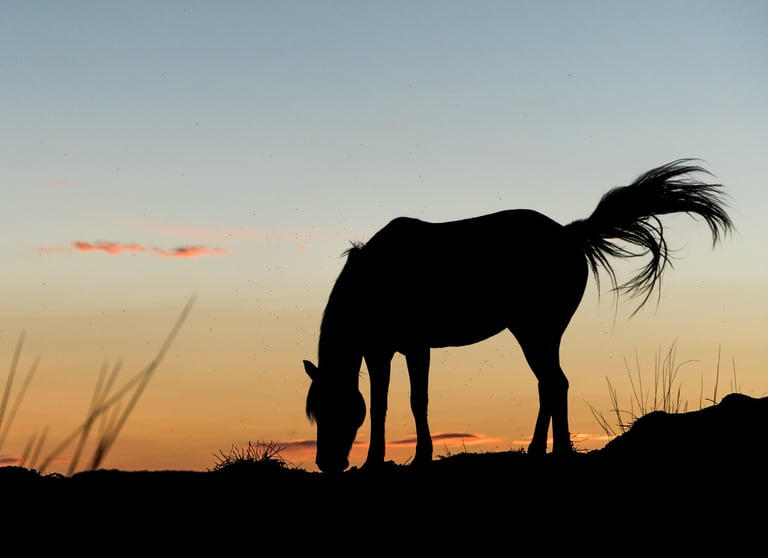
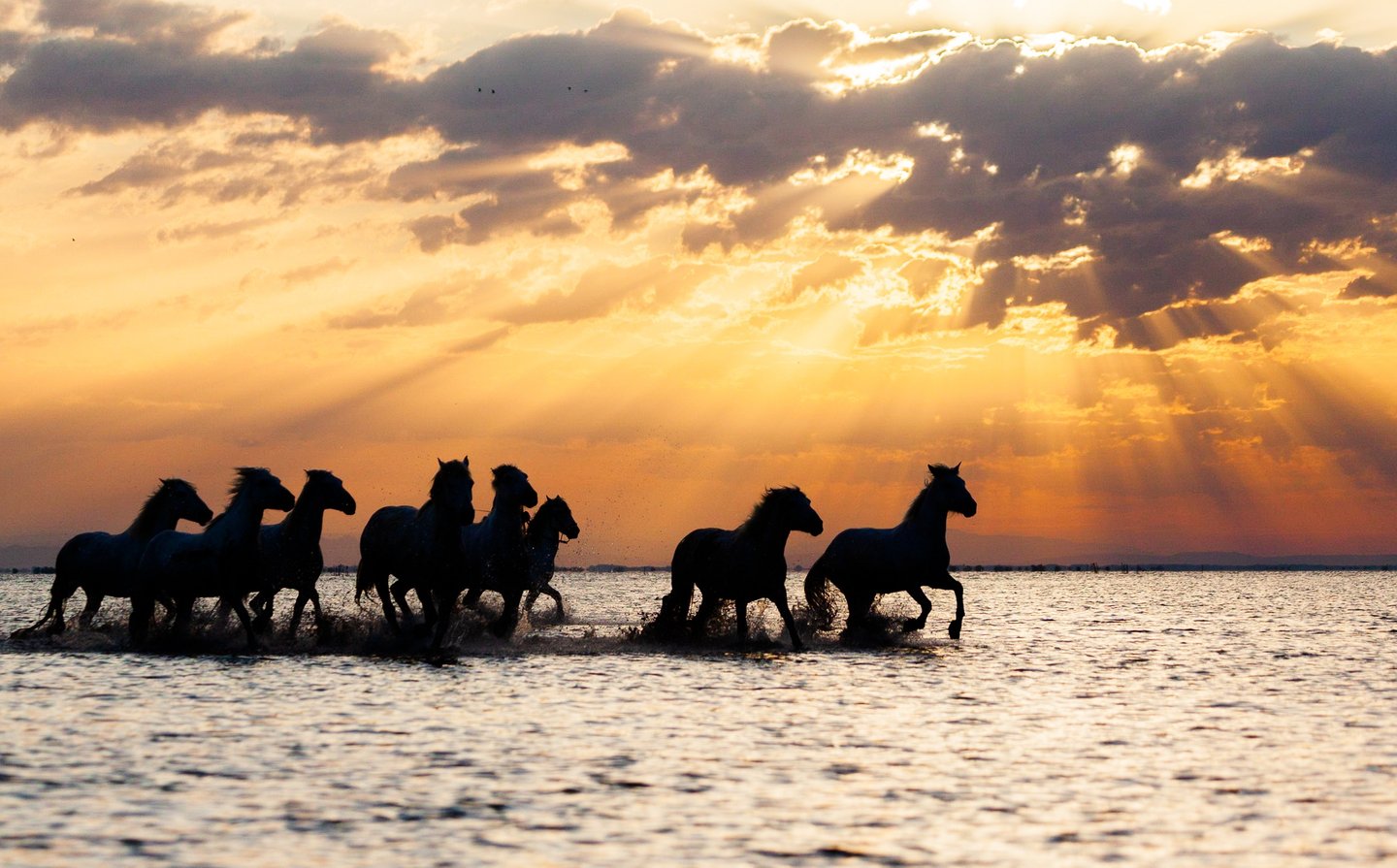
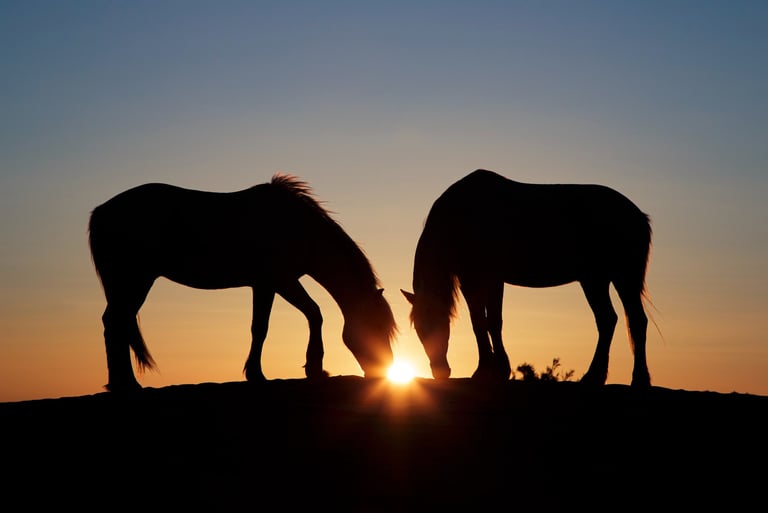
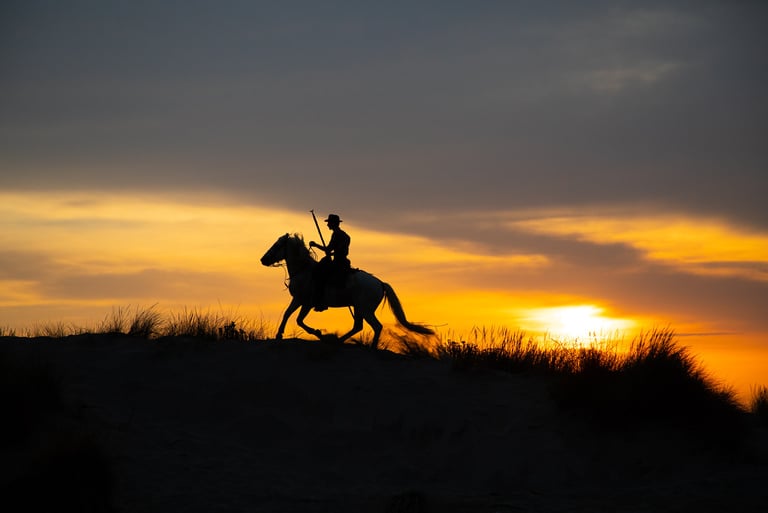
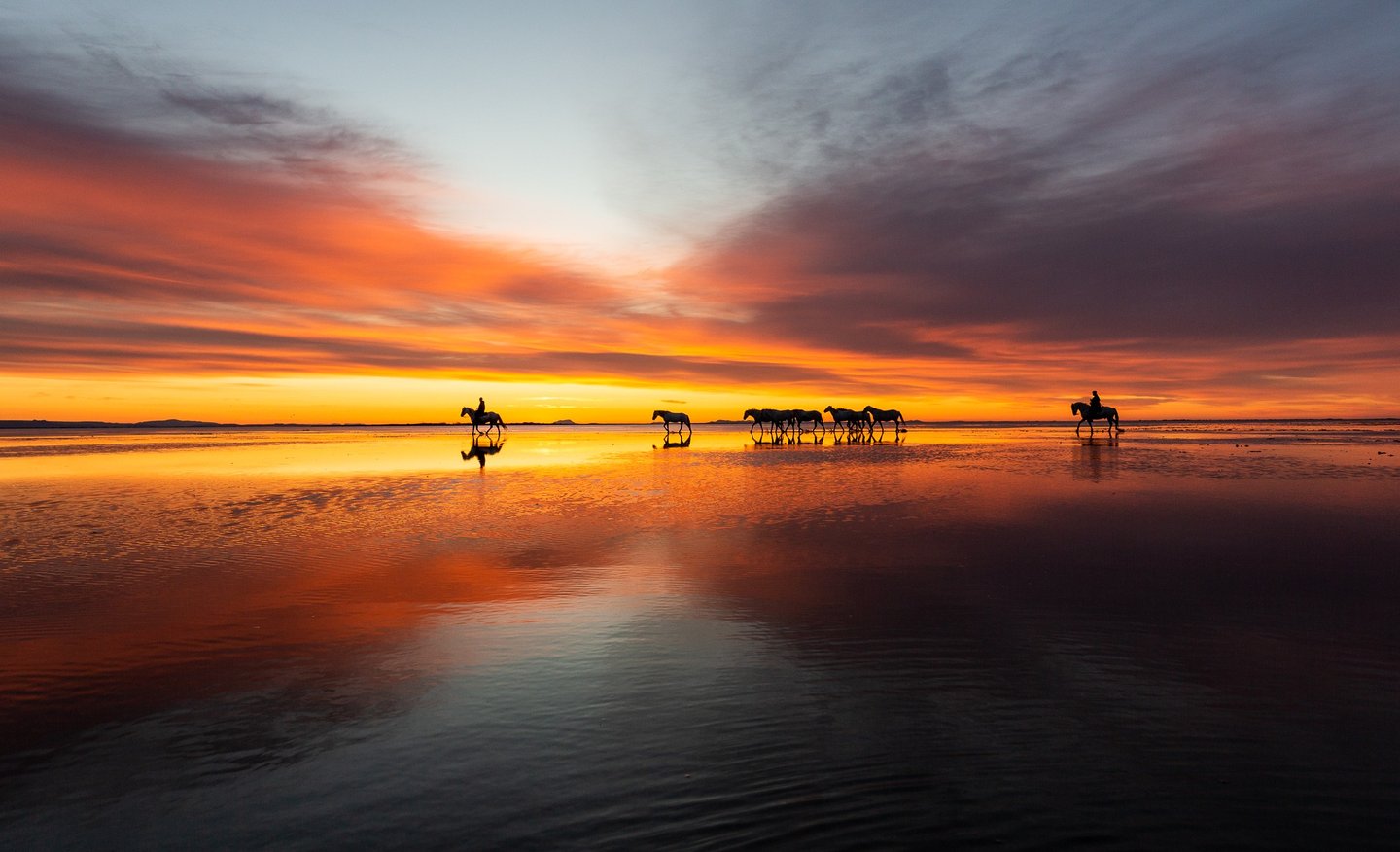
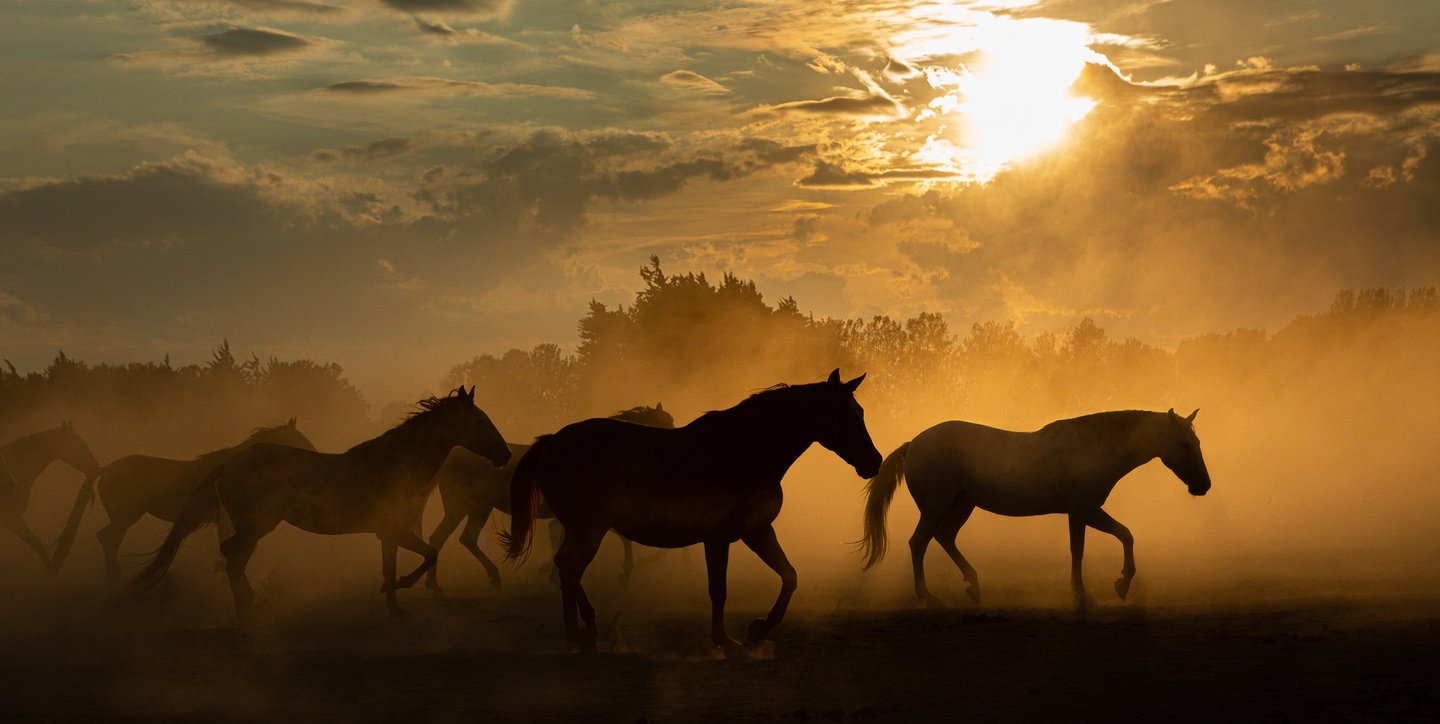
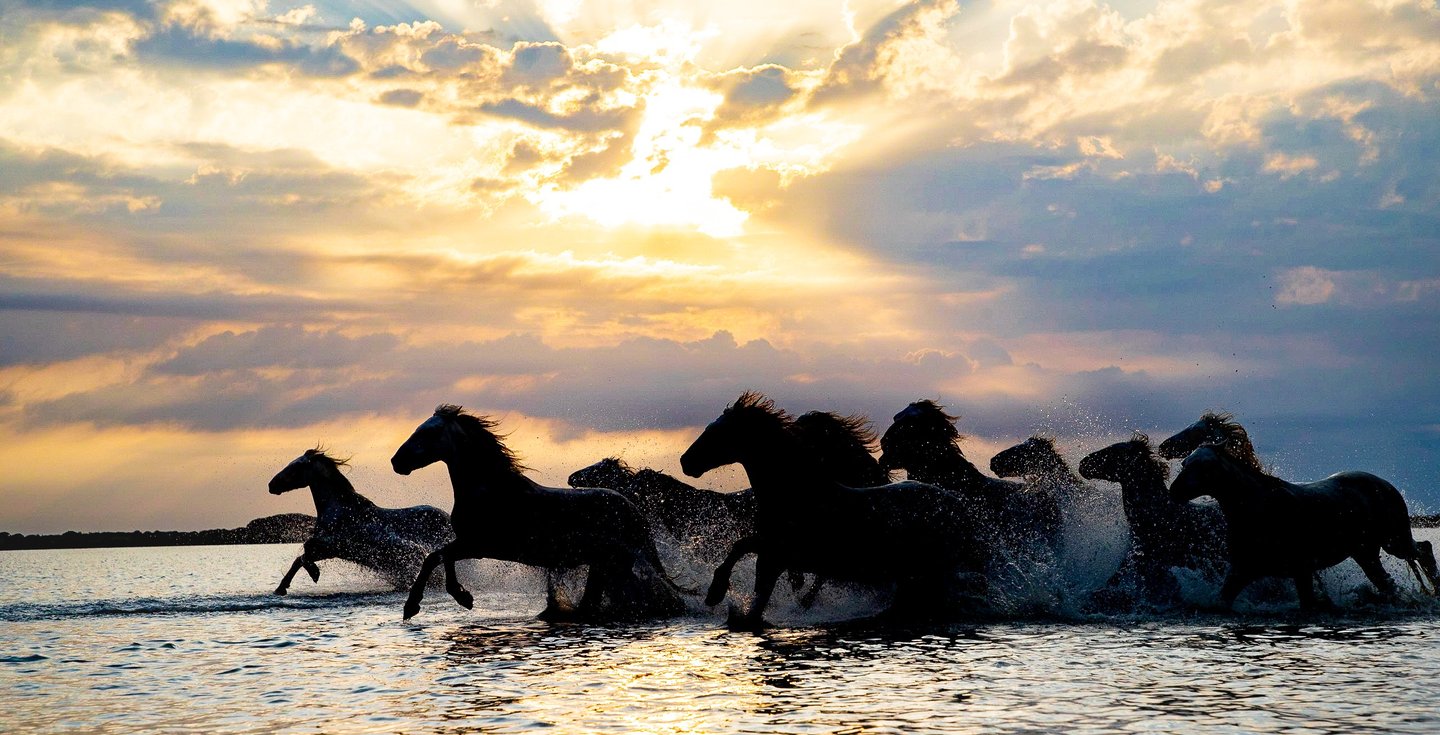
L'heure dorée (lever et coucher du soleil) : ces instants offrent une lumière chaude et douce qui met en valeur la robe blanche des chevaux ainsi que les paysages environnants. Les couchers de soleil, en particulier, transforment le ciel en une palette de couleurs éclatantes, offrant des arrière-plans saisissants et poétiques aux silhouettes des chevaux.
La lumière diffuse : même par temps couvert, la lumière reste souvent douce et enveloppante, ce qui est idéal pour des portraits riches en détails ou des scènes plus intimistes.
Des paysages naturels variés et époustouflants
La richesse des écosystèmes de Camargue offre une variété de cadres naturels servant de toile de fond aux photographies :
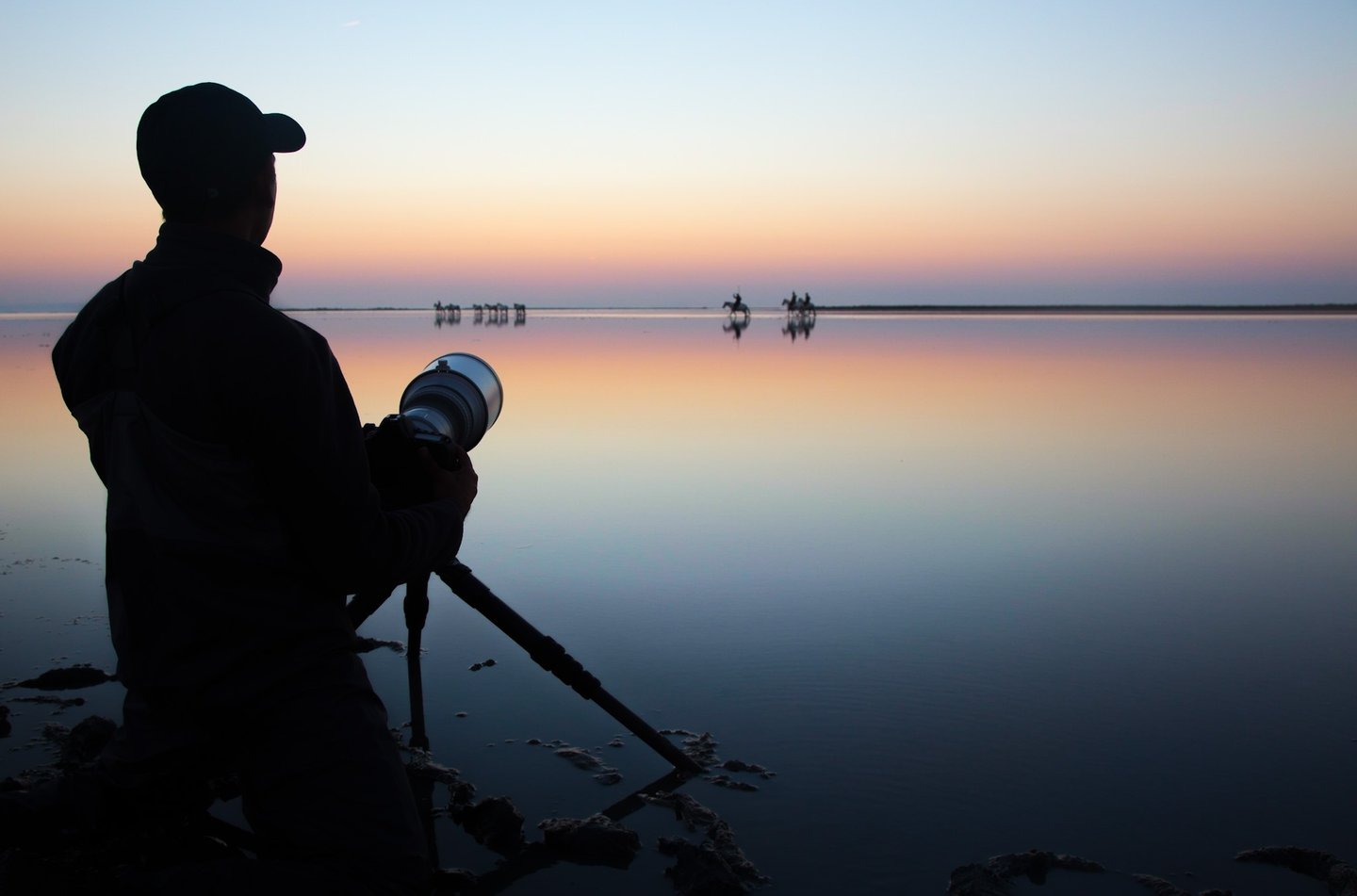
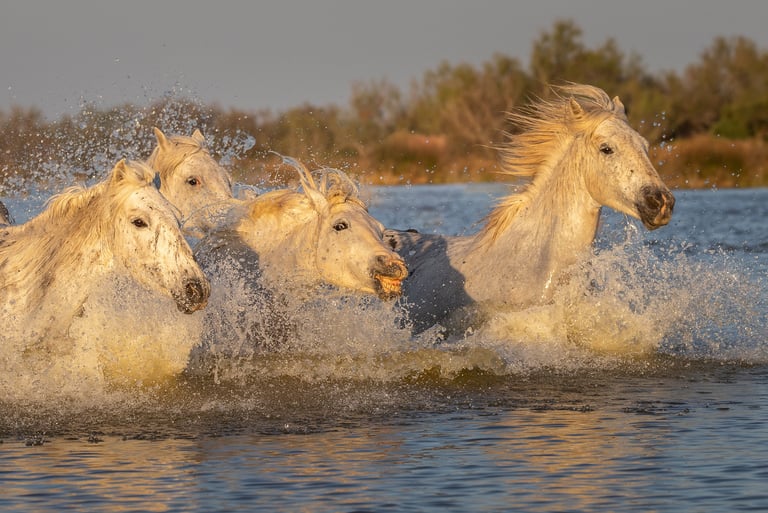
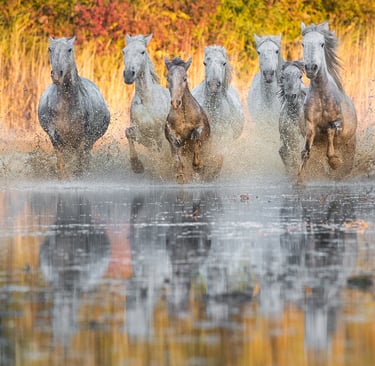
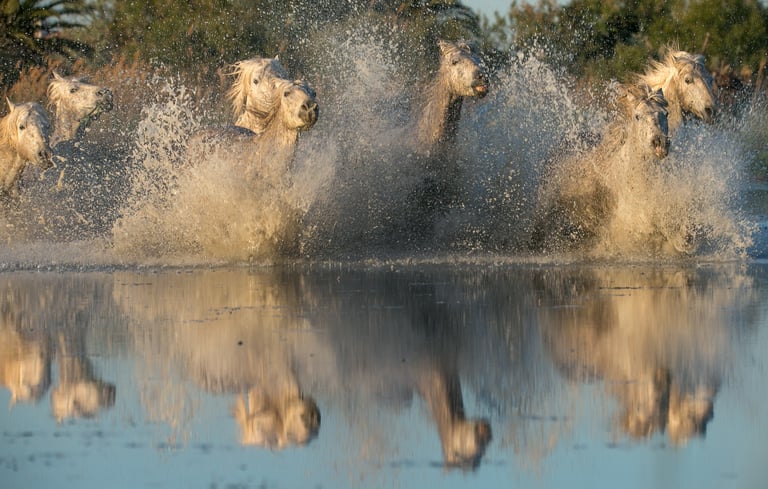
Les marais : Ces vastes étendues d'eau peu profonde, parsemées de roseaux et de végétation aquatique, constituent le terrain de jeu favori des chevaux. Les scènes de chevaux au galop dans l'eau, faisant jaillir l'écume, sont emblématiques de la Camargue et permettent de réaliser des clichés dynamiques et puissants. Les reflets dans l'eau ajoutent une dimension supplémentaire à la composition.
La mer : La proximité de la Méditerranée permet de photographier les chevaux sur des plages de sable, avec l'horizon infini et les vagues en arrière-plan. Ces images évoquent la liberté et la puissance brute de ces équidés.
Les dunes : Les paysages dunaires, avec leur végétation caractéristique et leurs courbes douces, offrent un contraste intéressant avec les zones humides. Ils apportent une texture et une perspective différentes aux compositions photographiques.
Il convient de noter que de nombreux sites en Camargue ne sont pas librement accessibles, car ils sont soumis à des réglementations ou appartiennent à des propriétaires privés.
Il est recommandé d'obtenir les autorisations nécessaires ou de visiter ces sites en compagnie d'une personne disposant d'un droit d'accès, par exemple dans le cadre d'un stage de photographie. Toutefois, certains photographes choisissent de s'y rendre par leurs propres moyens et reviennent souvent très déçus, faute de pouvoir photographier les chevaux dans des conditions optimales.
La faune emblématique et unique de la Camargue
Outre ses chevaux, la Camargue abrite une faune riche qui multiplie les opportunités de prises de vues :
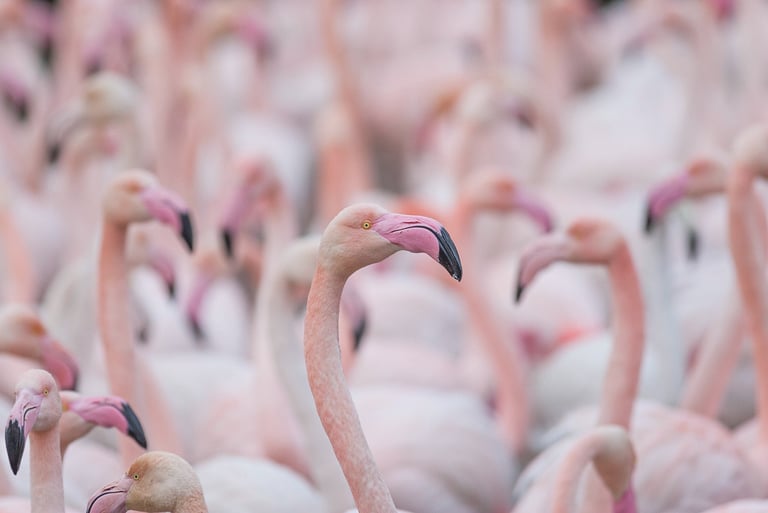
Flamants roses : Ces oiseaux emblématiques, au plumage d'un rose éclatant, apportent une touche de couleur et d'exotisme au paysage. Les scènes montrant la cohabitation des chevaux et des flamants dans les marais sont très prisées et symbolisent la biodiversité unique de la région.
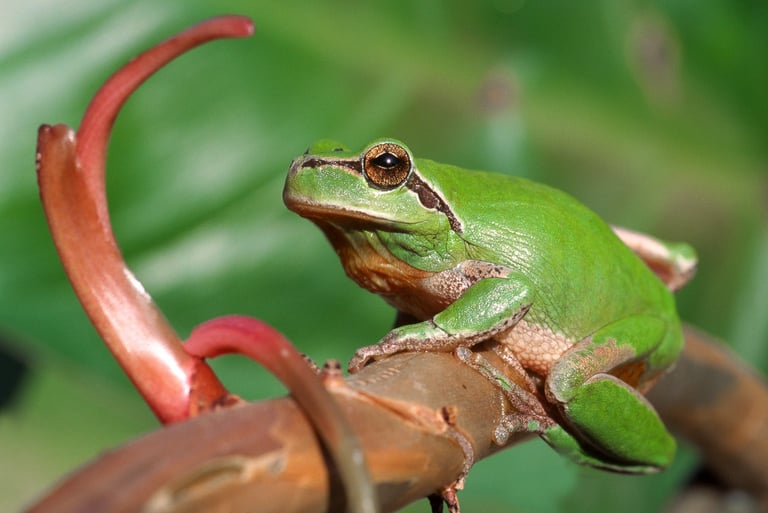
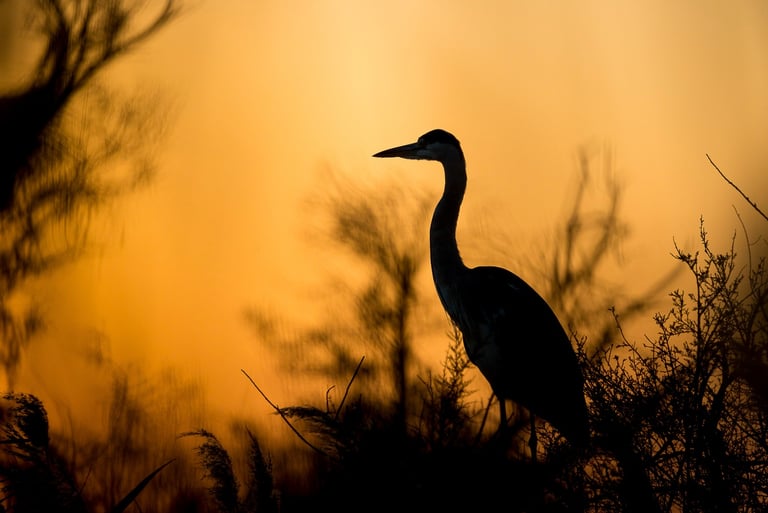
Autres oiseaux et animaux : Les marais sont peuplés de hérons, d'aigrettes et de nombreuses autres espèces d'oiseaux migrateurs ou sédentaires, offrant autant d'occasions de photographier la faune sauvage, aux côtés d'animaux tels que le renard roux, le ragondin, la rainette ou le sanglier.
Les gardians et les traditions camarguaises
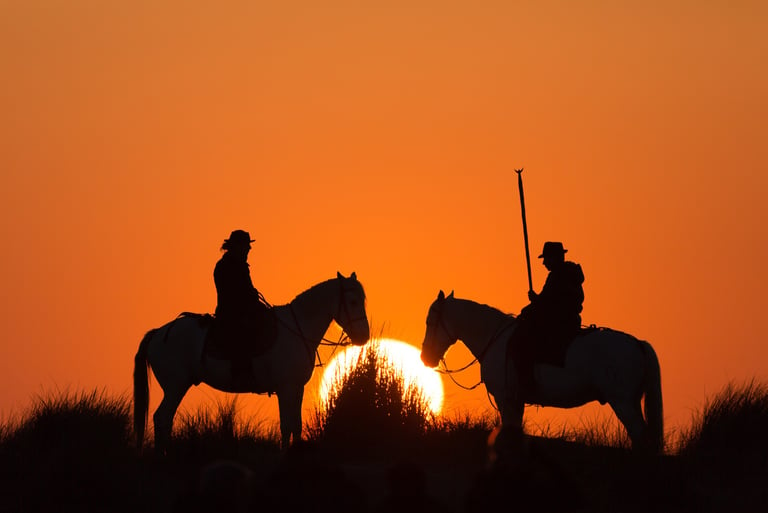
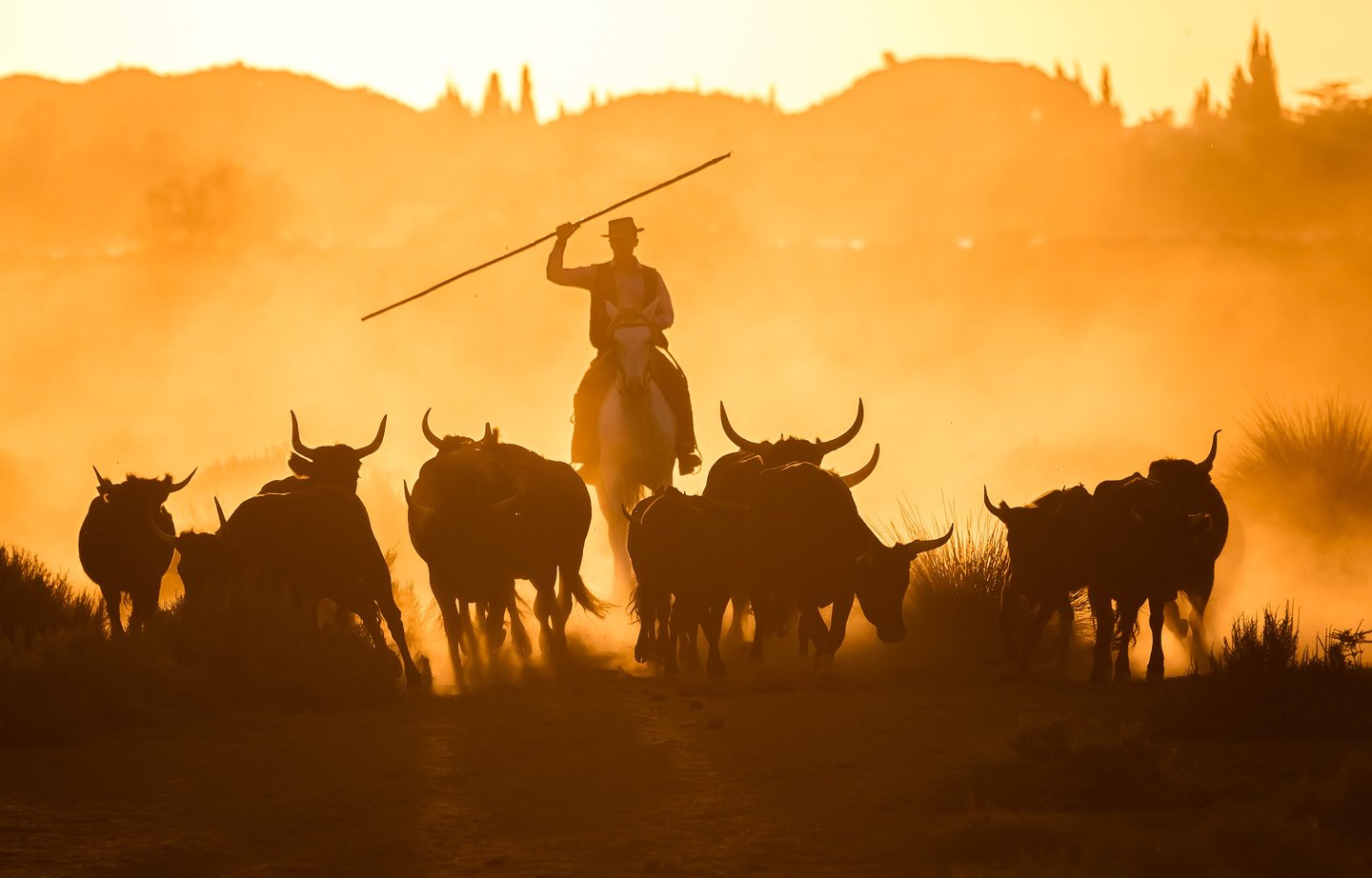
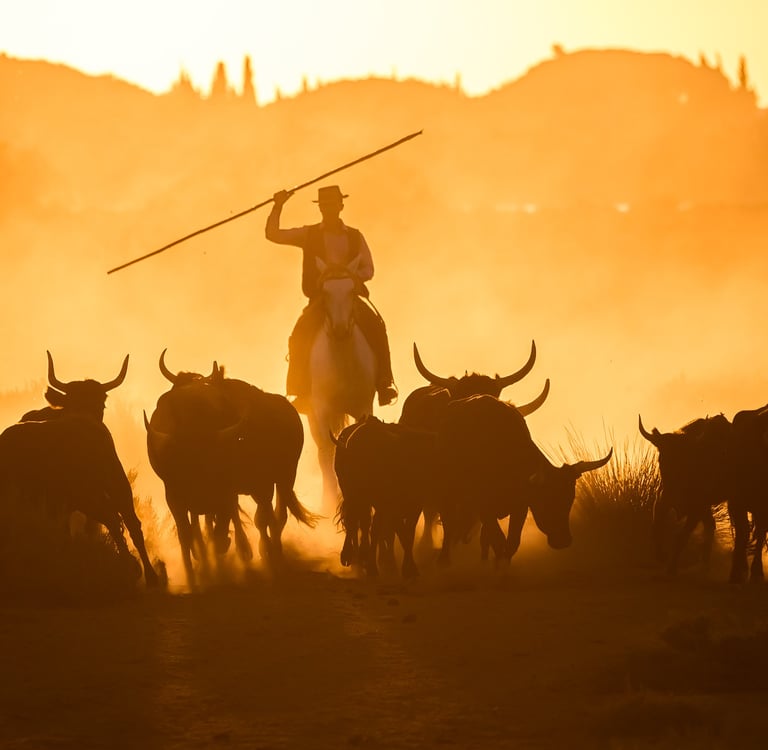
La présence des gardians, les cowboys de Camargue, confère une dimension humaine et culturelle unique à la photographie équestre. Vêtus de leur tenue traditionnelle et armés de leur trident, ils travaillent aux côtés de leurs chevaux pour gérer les troupeaux de taureaux. Ces scènes de travail authentiques, empreintes de tradition et du lien unissant l'homme à l'animal, sont très prisées des photographes. Elles racontent une histoire : celle d'un mode de vie ancestral et d'une culture bien vivante.
Des levers et couchers de soleil inoubliables
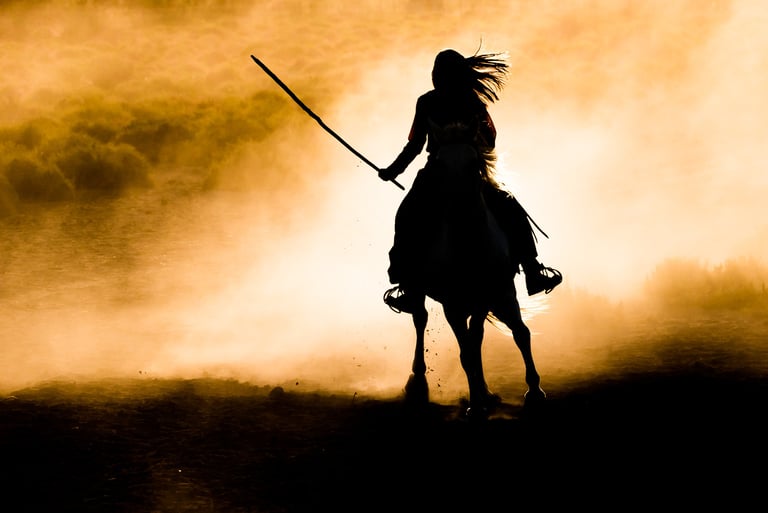
Les levers et couchers de soleil en Camargue sont légendaires. L'immensité du ciel, les reflets sur l'eau et les silhouettes des chevaux et des gardians composent des images d'une beauté saisissante. Les teintes chaudes et intenses du crépuscule métamorphosent le paysage en un tableau vivant, offrant des occasions de photographier des scènes uniques et mémorables.
En somme, la Camargue offre un cadre exceptionnel où beauté naturelle, faune sauvage et traditions humaines se conjuguent pour créer des opportunités photographiques inégalées, faisant de cette région une destination de rêve pour tout photographe équestre.
Saisons optimales : les meilleurs moments pour photographier les chevaux de Camargue
The Camargue is a dream destination for equestrian photographers, but the success of a photo shoot depends largely on the timing. Each season offers unique conditions regarding light, horse behavior, tourist crowds, and the general atmosphere. Understanding these variations is essential for capturing memorable images of the famous white horses.
Many professional photographers, including local figures like Patrice Aguilar, recognize the advantages of spring and autumn for photographing Camargue horses. These transitional seasons offer an optimal balance of weather conditions, light quality, and the overall environment :
Spring : Foals and Lush Landscapes
In spring, nature comes to life, offering lush green landscapes and the presence of young foals, which adds a touch of tenderness to the photos, and an excellent opportunity to capture touching moments between the little ones and their highly protective mothers. Spring is also characterized by a very nice light that is softer and less harsh than in summer. The sun sits at a lower angle, creating longer shadows and a more diffused, warm golden glow, especially during sunrise and sunset. This light enhances the horses' textures, forms, and movements without the stark contrasts typical of high summer.
Autumn : Dramatic Skies and Unique Ambiance
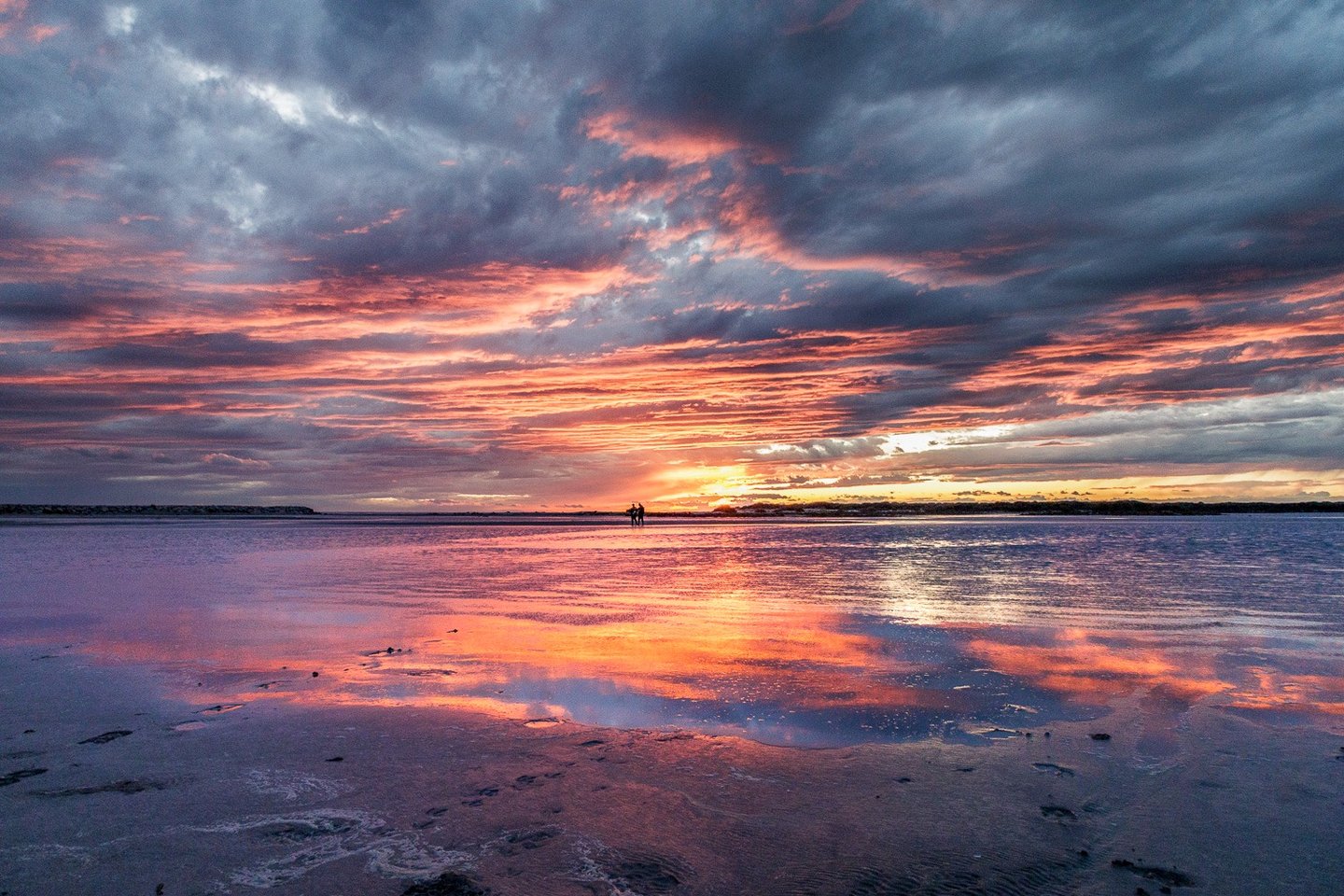
In autumn, the vegetation's warm colors and morning mists can create mysterious, epic atmospheres. The horses are also more active and dynamic, particularly during galloping sessions in the water, free from the lethargy that summer heat can induce. During fall, temperatures are generally milder, making long photo shoots more comfortable for both photographers and horses. Furthermore, the mosquito population, a major nuisance in summer, is significantly reduced during this season.
Both season are considered off-peak or shoulder touristic seasons, meaning fewer crowds. This allows photographers to work in a more serene atmosphere, undisturbed by tourists, and to capture purer, more authentic images of the horses in their natural habitat.
As an experienced local photographer, Patrice Aguilar frequently organizes photography workshops that schedule their sessions during spring and autumn, highlighting the importance of these times of year for capturing high-quality images of the horses and their interactions with the gardians. His expertise confirms that these seasons offer the best conditions for capturing the power, grace, and beauty of Camargue horses in their natural habitat.
In conclusion, while every season has its own charm, spring and autumn stand out as the ideal times for photographing Camargue horses, offering the best lighting conditions, a quieter environment, and more dynamic subjects.
Mastering Camargue Horse Behavior for Authentic Photography
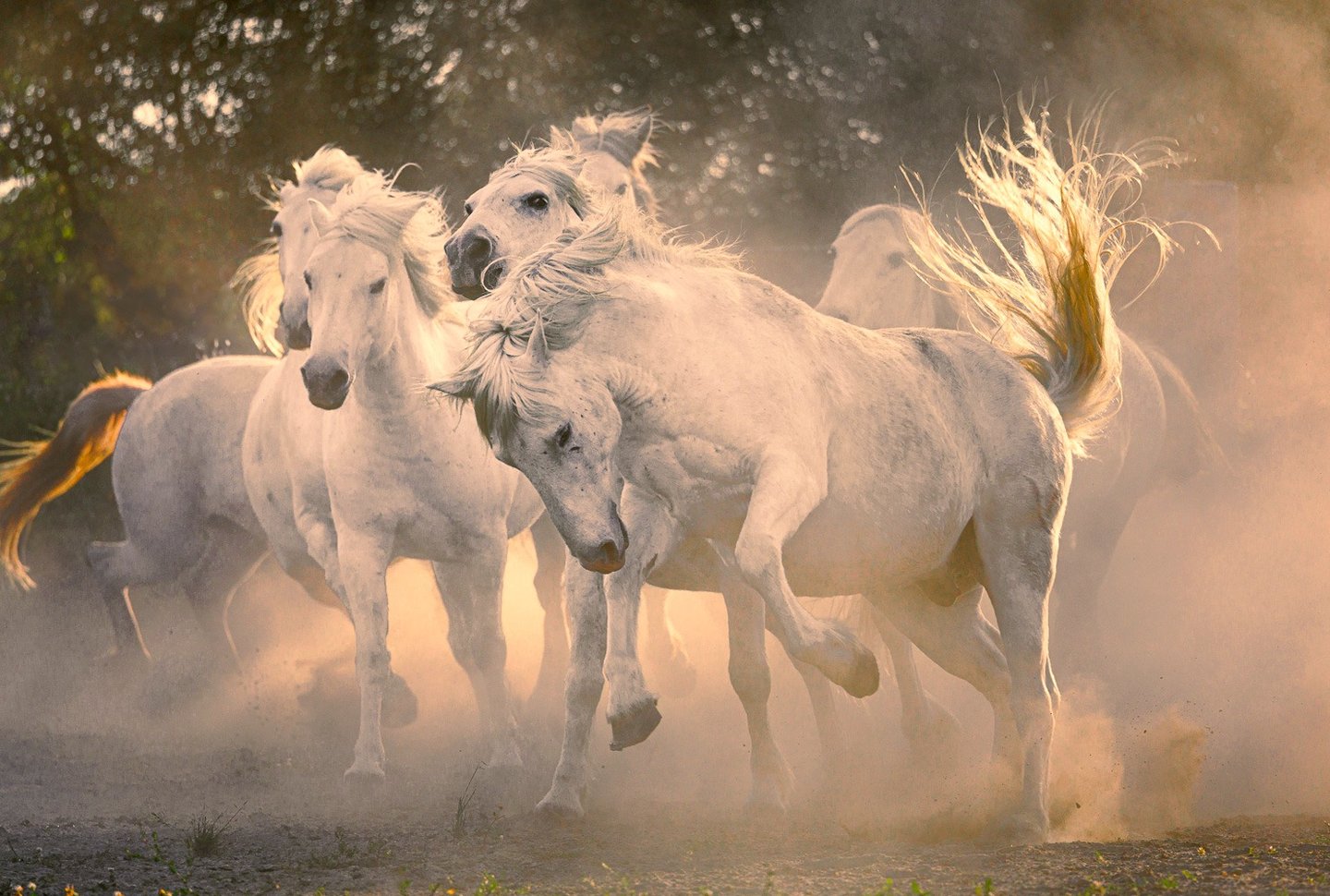
For equestrian photographers, a deep understanding of equine ethology is essential. It enables them not only to anticipate movements and interactions but also to capture the very essence of these majestic animals. Behaviors such as galloping, splashing, rearing, fighting, and running in a group are all rooted in their nature as prey animals and their social organization.
Why Horses Gallop and Run in Groups
The gallop is a horse's fastest gait and is intrinsically linked to its survival instinct as a prey animal. In the wild, flight is the primary line of defense against predators. Running at high speed allows for a quick escape from a perceived threat.
Horses often run in groups for several reasons :
• Safety in Numbers (Dilution Effect) : A large group offers better protection against predators. The more individuals there are, the lower the probability that any specific horse will be the target of an attack.
• Heightened Vigilance : In a group, there are more eyes and ears to detect potential dangers. Each member of the group contributes to collective vigilance.
• Social Cohesion : Group galloping strengthens social bonds and the hierarchy within the herd. It is also a form of play, especially among young horses, that allows them to develop their physical and social skills.
• Leadership: Although the decision to move is not always initiated by a single individual, the group often follows a leader who guides the others in a change of activity, such as moving to new pastures or escaping danger.
Why Horses Splash
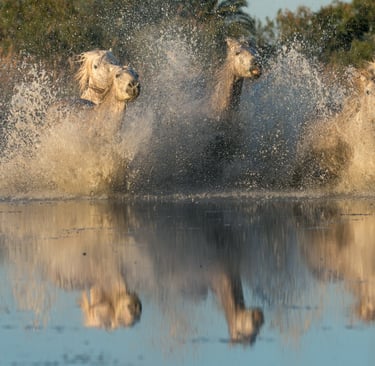
Splashing is often a direct result of galloping through water, a behavior particularly characteristic of Camargue horses in their marshlands. It is not an intentional act in itself, but rather a byproduct of their rapid movement through shallow water. However, horses may also splash out of playfulness, especially younger ones, or to cool off in hot weather. Scenes of horses splashing are highly sought after in photography for their dynamism and aesthetic appeal.
Why Horses Rear
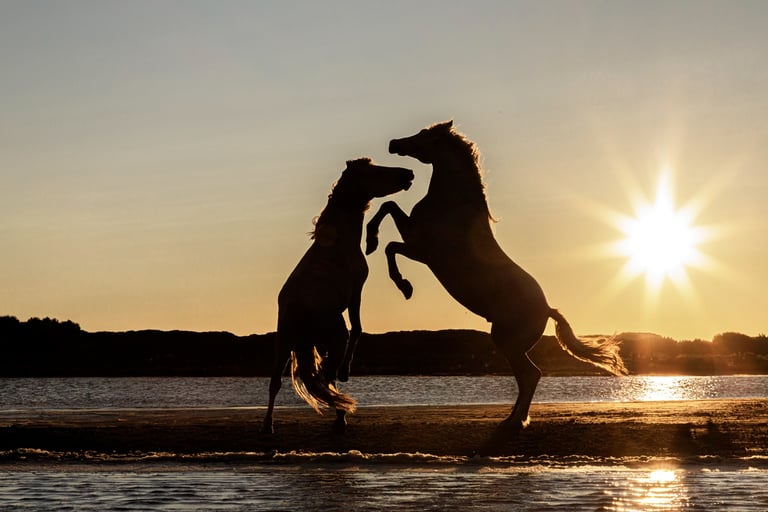
Rearing is a behavior in which a horse rises up onto its hind legs. It can have several meanings :
Defense or Fear : This is a powerful defensive reaction. A horse may rear if it feels threatened or trapped, or if it perceives imminent danger. It serves as a form of intimidation or a way to break free from restraint.
Refusal or Frustration : A horse may rear to refuse a request it does not understand or deems excessive, or if it is experiencing pain or discomfort (for example, due to ill-fitting tack).
Excitement or Play : In young horses or during play, rearing can be an expression of energy and high spirits. Stallions may also rear during displays or confrontations.
Pain : Physical pain, particularly in the back, hips, or limbs, can trigger rearing as a reaction to discomfort.
Why Horses Fight
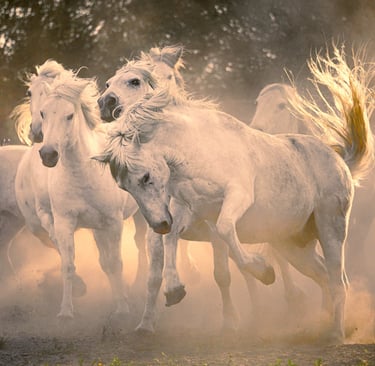
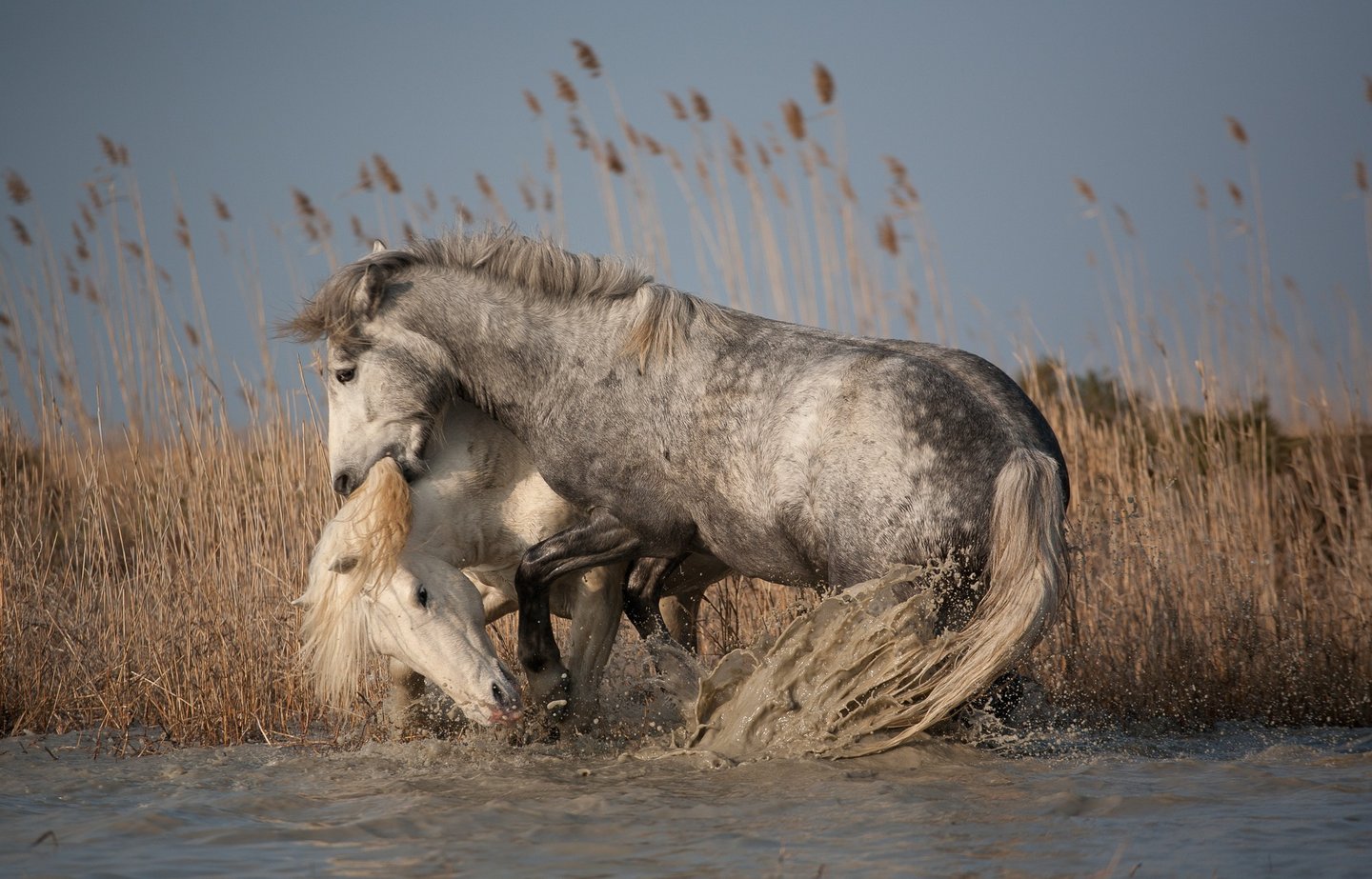
Fights between horses, while less frequent in a stable group, are important interactions for establishing and maintaining social hierarchy. They can manifest as biting, kicking, bucking, and charging.
Establishing Hierarchy : Within a herd, horses establish a dominance hierarchy to regulate access to resources (food, water, mates) and ensure group stability. Confrontations are more frequent when a new group is forming or when new individuals are introduced.
Defending Territory or Mares : Stallions, in particular, may fight to defend their territory or to gain access to mares in heat.
Play : Among young horses, mock fighting is part of social play and is essential for developing physical and social skills.
Stress or Confinement : Aggressive behaviors can be exacerbated in confined or stressful environments.
It is important to note that once the hierarchy is established, aggressive interactions become more subtle, manifesting as discreet threats (pinned ears, body positioning) rather than outright fighting, in order to minimize the risk of injury within the group.
Understanding these dynamics allows Camargue photographers to anticipate key moments and capture images that tell a deeper story about the lives of these fascinating animals.
Essential Photography Gear for Capturing Camargue Horses
Photographing Camargue horses galloping through the marshes at sunrise or dusk is an unforgettable experience for any wildlife photographer. However, this wet, salty, and often dusty environment, combined with the speed of the subjects, imposes specific equipment requirements.
This guide helps you choose your gear, organized by expertise level and broken down by the categories of accessories essential for tackling the conditions of the Camargue.
Recommended Camera Bodies for Camargue Photography
Photographing horses in motion requires, above all, a responsive camera body with a capable autofocus (AF) system and a sufficient continuous shooting speed. Mirrorless cameras are currently recommended for their lightweight design, silent mode, and automatic animal eye detection.
Beginner
An APS-C camera body is ideal for getting started without breaking the bank. It offers a good balance of weight and price, along with a crop factor that helps "bring subjects closer."
Recommended models : Canon EOS R10, Nikon Z50 II, Sony A7 III, Panasonic Lumix DC-G100.
Advantages : Lightweight, high-performance burst shooting (up to 15 fps for the R10), modern autofocus with animal detection.
Limitations : Lower performance in low light (dawn/dusk).
Enthusiast
The serious enthusiast will look for a high-end APS-C body or an affordable full-frame model, offering better high-ISO performance and a more robust build capable of withstanding sea spray.
Recommended models : Canon EOS R7 (the king of APS-C wildlife photography with its 30 fps), Sony Alpha 7 III, Nikon Z6 III.
Advantages : In-body image stabilization, weather sealing (dust and moisture resistance), excellent digital noise management.
Limitations : Full-frame models require longer and heavier lenses.
Professional
Professionals require absolute reliability, impeccable image quality, and an autofocus system capable of locking onto a galloping horse in extreme lighting conditions.
Recommended models : Sony Alpha 1 II, Sony A9 III, Nikon Z8, Canon EOS R5 II or R1.
Advantages : Extreme burst speeds with no viewfinder blackout, formidable AF tracking, maximum weather sealing, and high dynamic range.
Limitations : Very high cost and greater bulk.
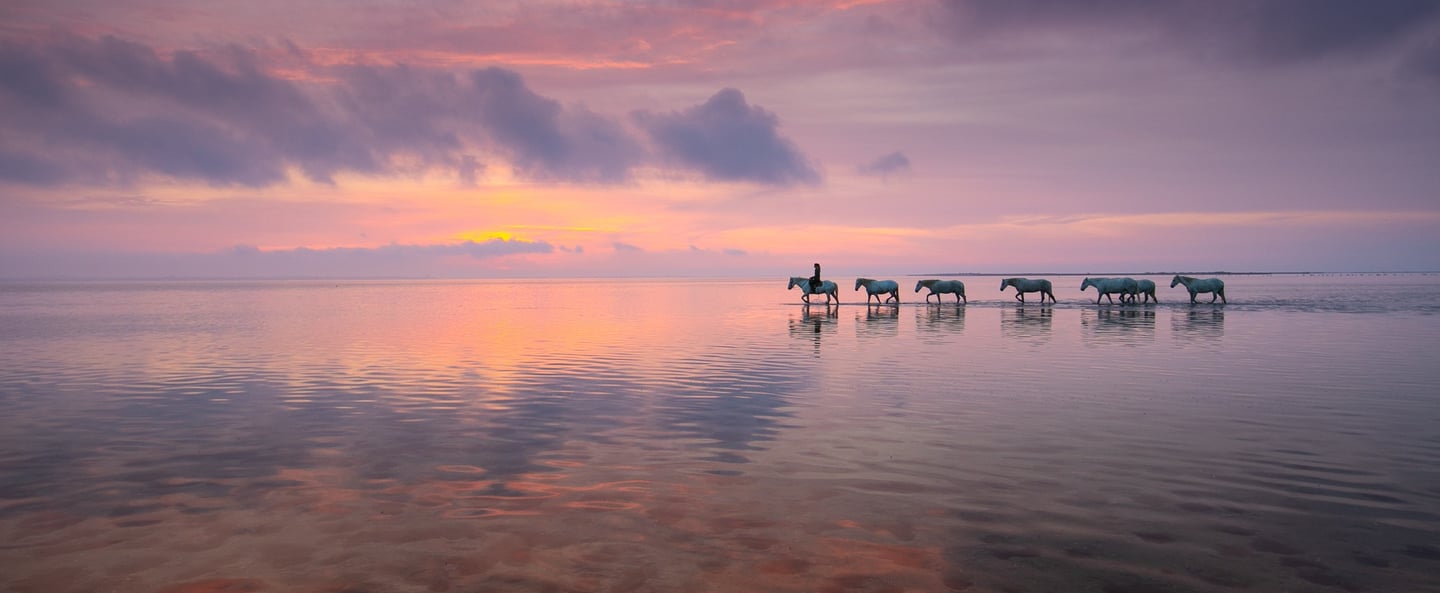
The Best Lenses for Action & Portrait Shots
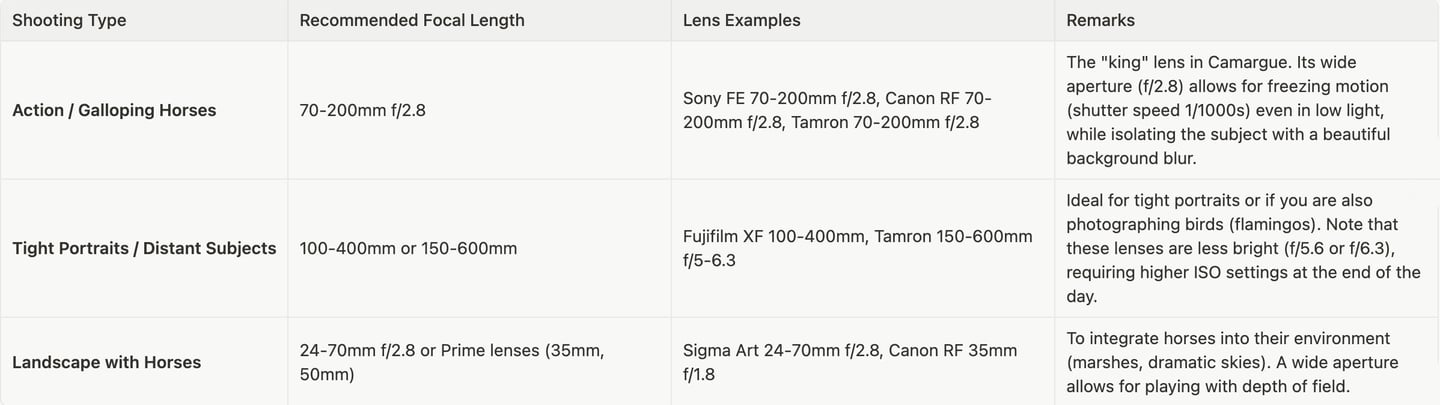
The need to maintain a safe distance from the (often unpredictable) horses, combined with the vast open spaces of the Camargue, makes telephoto lenses essential. Lens aperture is crucial, as the best photos are often taken early in the morning or late in the evening when light levels are low.
Tip: Avoid changing lenses in the field to prevent sand or salty spray from entering your camera body. Bring two bodies if you can !
High-Speed Memory Cards : Don't Miss the Shot
Wildlife photography, and capturing galloping horses in particular, relies heavily on burst shooting. For your camera to fire off a rapid sequence of shots without slowing down, the speed of your memory card is absolutely critical.
The role of the buffer and write speed
When shooting in burst mode, images are first temporarily stored in the camera's internal memory buffer. Only then are they transferred to the memory card. If the card isn't fast enough, the buffer fills up quickly, forcing the camera to slow down, or even stop the burst, while waiting for the card to clear the buffer.
In wildlife photography, where every fraction of a second counts, a buffer that clears quickly is essential to avoid missing the decisive moment.
CFexpress Type B cards (offering speeds of up to 1,700 MB/s and beyond) enable ultra-fast continuous shooting (20 fps and up) and 4K/8K video recording with professional cameras. They are the standard for high-end cameras and are essential for fully leveraging the performance of the latest mirrorless cameras.
Capacity : For RAW files (which are larger), opt for cards with a minimum capacity of 64 GB to 128 GB. It is often better to use several medium-capacity cards rather than a single very large one to minimize the risk of data loss.
Reliability : Choose well-known brands (SanDisk, Lexar, Sony, ProGrade Digital) for their reliability and durability.
Modern cameras are power-hungry, so remember to bring more than one battery.
Wildlife and action photography is very power-intensive, especially with mirrorless cameras (due to the electronic viewfinder, high-speed continuous shooting, image stabilization, and continuous autofocus/AF-C or AiServo).
Quantity : Bring a minimum of three batteries per day of shooting. Horses in action offer little downtime.
Organization : Use numbered stickers (1, 2, 3...) on your batteries to ensure even rotation (equalizing wear) and to easily distinguish between full and empty ones.
Battery Grip : Using a battery grip is highly recommended. It allows you to use two batteries simultaneously and provides a better grip for vertical-format shots (portrait orientation).
Cold Weather : If you are shooting early in the morning during spring or autumn, keep your spare batteries close to your body (e.g., in an inner pocket) to preserve their charge.
Protecting Your Gear : Rain, Mud, Salt & Sand
In the Camargue, the danger to your gear comes not only from the rain but, more importantly, from saltwater spray and mud kicked up by horses' hooves.
Protective Covers (Rain Covers)
It is essential to protect the camera body and lens combination. Makeshift plastic bags should be avoided when dealing with saltwater.
High-end (Professional) : Think Tank Hydrophobia. Made from 3-layer nylon (Gore-Tex style) with sealed seams, these feature a strap and a front lens element cover. They require the purchase of a specific eyepiece for your camera body.
Mid-range (Amateur) : Think Tank Emergency Rain Cover or LensCoat RainCoat. Very compact, they fit into any bag and deploy quickly by attaching to the camera's hot shoe.
Entry-level (Beginner) : Vortex Media Pro Storm Jacket. A simple tubular design with elastic cords; sufficient for protection against splashes.
Essential maintenance accessories
Lens hood : Never remove it ! In addition to preventing lens flare, it serves as your first line of physical defense against water and mud splashing onto the front element.
Microfiber cloths : Bring several, kept in waterproof bags (like Ziploc bags). Saltwater dries quickly and leaves marks that are difficult to remove.
Eyeglass wipes : Very handy for quickly and effectively cleaning the front element between horse passes.
UV filter/Protector : If you are using a very expensive lens (e.g., 70-200mm f/2.8), screwing a high-quality neutral filter onto the front element helps protect it from scratches caused by sand or repeated mud cleaning.
Essential Photographer's Attire & Personal Protection
Beyond your camera gear, your own comfort and protection are essential to fully enjoy your photography tour in the Camargue and avoid environmental discomforts.
Clothing
Waterproof, windproof jacket : Essential for cool mornings, windy evenings (Mistral), and sudden rain. Opt for breathable materials to avoid overheating.
Long, light-colored clothing : Even in hot weather, light-colored trousers and long sleeves are recommended. They provide sun protection and are less attractive to mosquitoes.
Layered clothing : Temperatures can change rapidly between sunrise and midday. Adapt by wearing layers that are easy to put on or take off.
Waders
To photograph Camargue horses, you will often need to step into the water of marshes or ponds to get low-angle shots or position yourself in their path.
You can choose between boots, thigh-high waders, and chest waders depending on how deeply you intend to immerse yourself; however, chest waders are by far the most practical option, as they protect your clothes from mud and dust and also provide good protection against mosquito bites.
Sun Protection
Hat or cap : To protect your face and neck from the intense Camargue sun.
Sunglasses : For visual comfort and UV protection, especially given the glare off the water.
Sunscreen : Apply generously to all exposed areas of skin, even on cloudy days.
Insect Protection
Mosquitoes can be abundant in the Camargue, especially at sunrise and sunset, and can make the experience very unpleasant.
Mosquito repellent : An effective product is absolutely essential. Apply it to exposed skin and your clothing.
Face/head net : For times when mosquitoes are particularly aggressive, a net worn over a hat can be a lifesaver, allowing you to focus on your photography.
Anti-mosquito clothing : Certain garments are treated or designed with a tight weave to prevent bites.
I hope this guide proves useful. If you follow all these tips, your time with the Camargue horses will be unforgettable, and you will return home with memory cards and a mind filled with stunning images.
And finally, most importantly : have fun and enjoy your stay in the Camargue !!!
Elevate Your Photography : Exclusive Camargue Horse Workshops with Patrice Aguilar
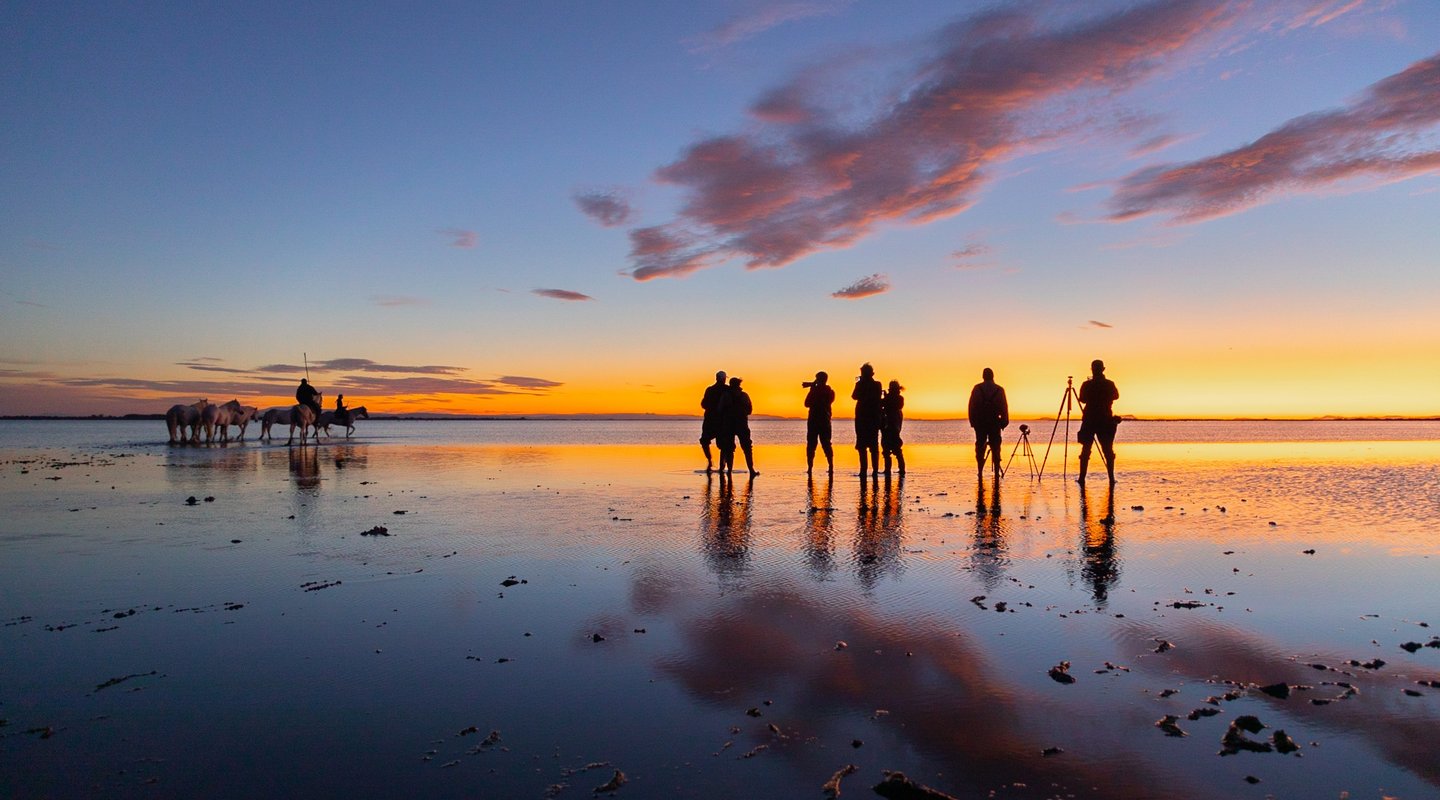
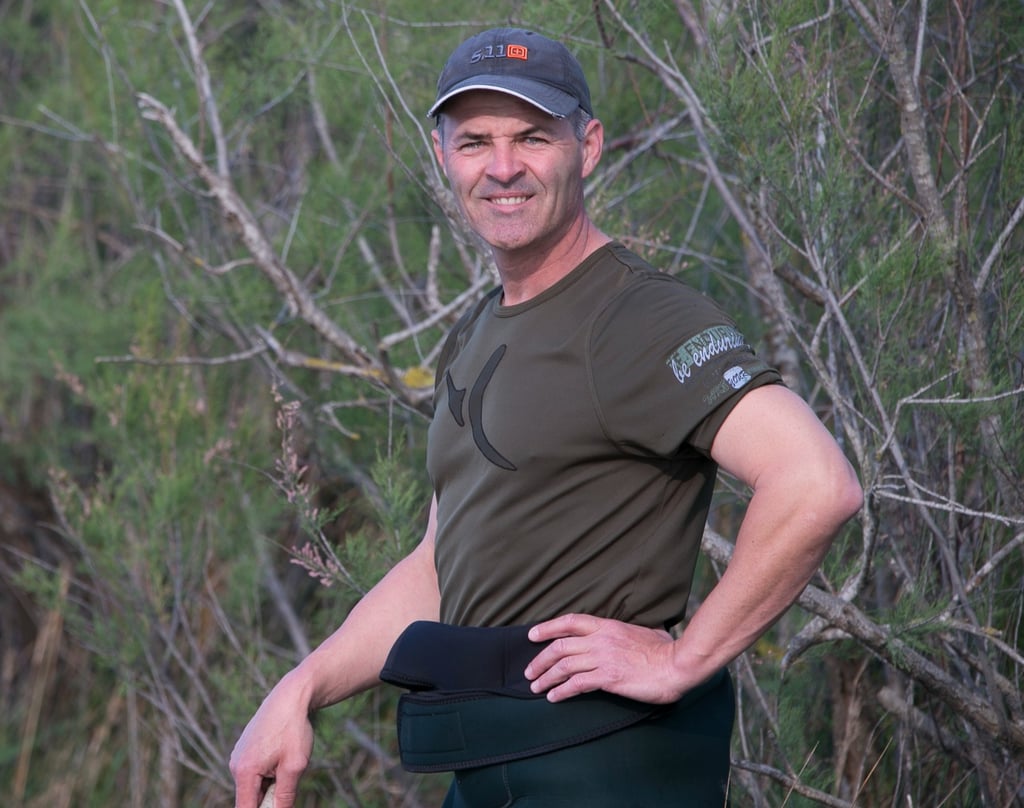
Beyond the equipment, it is expertise, local knowledge, and privileged access that transform a simple photograph into a work of art. This is precisely what a workshop with Patrice Aguilar, a professional photographer whose passion for the Camargue spans over 25 years, offers you.
25 years of expertise at your service
With a quarter of a century spent traversing the marshes, Patrice Aguilar does more than just know the region, he lives it. His intimate understanding of horse behavior and the nuances of this unique ecosystem is an invaluable asset. He knows exactly where and when to position himself to capture that magical moment, whether it is a wild gallop at sunrise or an intimate portrait in the golden evening light. His guidance, tailored to your skill level, will enable you to master wildlife photography techniques and make the most of your equipment.
Exclusive Access and Private Locations
What truly sets Patrice’s workshops apart is the network of relationships he has cultivated over decades. Thanks to strong friendships and mutual trust with the manadiers (bull and horse breeders), Patrice opens doors to private locations and exclusive areas inaccessible to the general public. These key partners understand exactly what photographers are looking for and orchestrate authentic, spectacular scenes, ensuring unique photo opportunities while honoring Camargue traditions.
Upcoming workshops in the Camargue (SPECIAL OFFER - SEE BELOW)
You can click on the links below for more informations regarding the upcoming workshops in November 2026 & March 2027 or contact me directly by email at : contact@pixterra.fr
Get an exceptional 10% discount by registering before August 31, 2026,
for the November 2026 (03rd-08th) workshop or one of the March 2027 workshops (08th-14th & 22nd-28th) !
Testimonials
They took part in a Camargue horse photography workshop with Patrice, and here is what they thought of it
Lisa Moore ⭐️⭐️⭐️⭐️⭐️ (USA)
2 months ago
I signed up for this intensive workshop for the opportunity to photograph horses running on the beach and stallions play-fighting each other. Our group came away with hundreds of amazing images but what really sticks with me is the experience of getting to know the horses over the course of the week.
We had one afternoon with my favorite herd that included a mare and her 2-3 month old foal. The interaction was priceless ! Patrice has perfected his horse photography with these amazing creatures for many years and his expertise (and patience) is legendary.
You won't find a better guide to lead you through the experience of the White Horses of the Camargue. I hope to have an occasion to come back for another week soon.
Bonnie forrest ⭐️⭐️⭐️⭐️⭐️ (USA)
2 months ago
I’ve attended many photography workshops over the years, and this experience was truly exceptional. Patrice has a rare ability to meet each participant exactly where they are, whether you’re just starting out or have been shooting for years.
What stood out most is his approach: never intrusive, always available. If you want space to explore, he gives it. If you’re ready to push your skills further, his guidance is precise, thoughtful, and immediately impactful.
The entire week felt thoughtfully curated, from our gracious and welcoming hosts at the hotel to the rhythm of the morning and afternoon shoots.
Unlike anything else I’ve attended, and an experience that meaningfully elevated my photography.
Bernard Crampon ⭐️⭐️⭐️⭐️⭐️ (SPAIN)
2 months ago
Patrice Aguilar is not only a great professional photographer with over 25 years of experience photographing horses and their environment, but also someone who will share his knowledge with you when you need it most. It's also important to highlight Patrice's flexibility during photo sessions, for example, by changing locations in case of inclement weather.
This is thanks to his personal relationships with the ranchers who rent us the horses for the photo shoots. Patrice is also excellent in terms of organization, outside of photography.
He's attentive to every detail and always willing to help.
We could also mention his cheerful nature. I've known Patrice for many years, and I never tire of returning to the Camargue with him.
LOOKING FORWARD TO SEEING YOU VERY SOON IN THE CAMARGUE !!!
Fine art prints and photography workshops.
EURL PIXTERRA
contact@pixterra.com
+33 6 87 22 56 40
© 2026. All rights reserved.
Patrice Aguilar
Impasse du vieux pin
13180 Gignac la Nerthe
France


CONTACT